Des Plaines Epoxy Flooring has handled epoxy-flooring in Barrington and across the northwest suburbs for more than 20 years, and fitness rooms are some of the floors we think hardest about before quoting. A gym floor is rarely one floor. It is two or three different loads sharing a room, and the coating plan has to follow where each load lands rather than treat the whole slab one way.
That is why our walk-through starts with a sketch, not a color chart. We mark where machines stand, where carts and cleaning equipment roll, where water bottles and sweat land, and where weights are set down hard. Each zone gets the material that suits it, and the written proposal spells out the product line, the coat count and the finished thickness for every resin area.
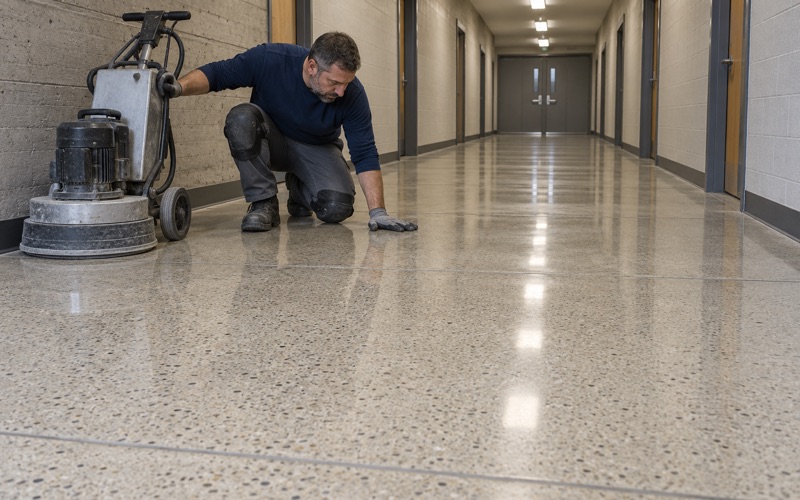
Preparation does not change from one job to the next. The slab is opened by diamond grinding or shot blasting to a measured surface profile, never with an acid etch, and a moisture test is part of the scope before the price is final. If the concrete shows cracks, spalls or old coating that make it a poor candidate, we say so before anything is sold.
Barrington’s Public Fitness Floor as a Reference Point
A Park-District Fitness Center Inside the Village
The clearest local example of a mixed-load floor is a public one. The Barrington Park District Fitness and Recreation Center sits at 235 Lions Drive, in Langendorf Park, and the address geocodes inside the village on its Lake County side, in Cuba Township. The district describes a 4,500-square-foot fitness center there, alongside a gymnasium with a walking track and meeting and community rooms.
We mention the building as a reference point, not as a job. We have not worked there, and we have not read which rooms carry which flooring. What the district’s own description does show is the kind of space many Barrington owners are trying to recreate at a smaller scale, whether that is a studio, a club room or a home gym.
Why One Room Carries Several Floors
A fitness center of that size usually mixes cardio rows, selectorized machines, open stretching space and a free-weight area. Each of those puts a different demand on the surface beneath it. Treating the whole room as one coating decision is the mistake we see most often when a fitness floor has failed early, because the material that suits one zone is wrong for the next.
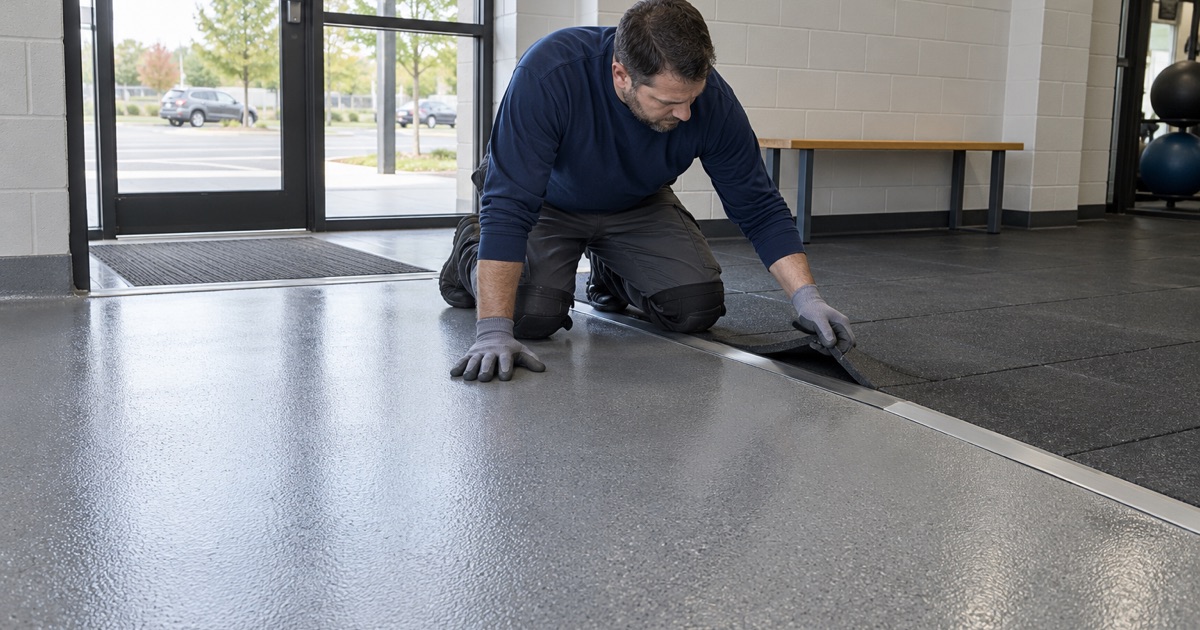
So our first deliverable on a fitness room is a zone map. It shows where resin belongs, where resilient rubber belongs, and where the two meet. The transition line matters as much as the field areas, because a coating edge left exposed where carts cross or where mats butt against it is where peeling usually starts.
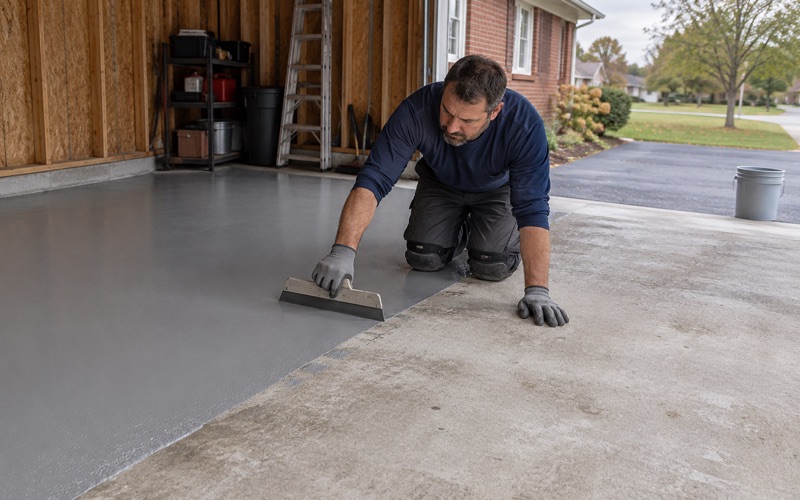
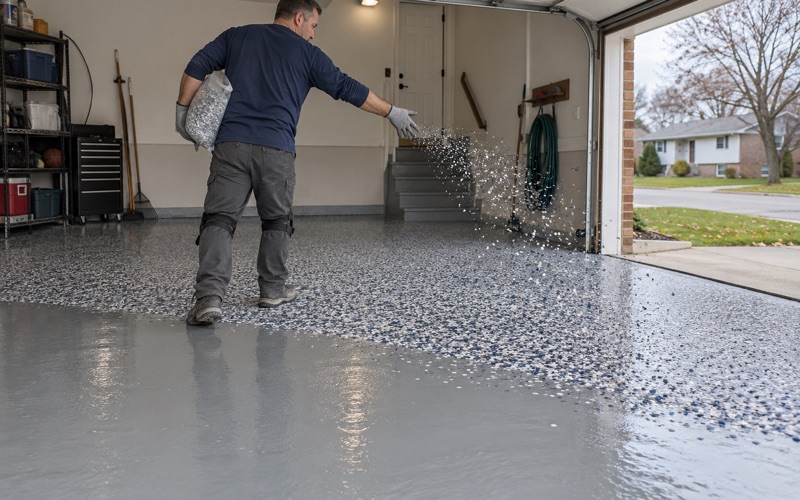
The same thinking scales down to a garage or basement gym in the village. A treadmill and a rack on one side of a two-car garage, a set of dumbbells on the other and a car parked between them make three zones in a small footprint. We map it the same way, and we coat only the areas where resin will hold up to what actually happens there.
Looking for epoxy-flooring closer to Lake Zurich? See Epoxy-Flooring in Lake Zurich.
Machine Feet, Rolling Loads and Where Weights Fall
Concentrated Loads From Treadmills and Racks
A treadmill, a squat rack or a cable machine does not spread its weight evenly. It stands on a handful of small feet, and every rep or stride pushes that load into a few square inches of floor. A thin roll-on paint will dent and wear through under that, which is why we build these areas with 100% solids epoxy at a stated film thickness.
Machines also get moved. Staff slide them to clean, reposition them for a new layout, or replace them outright. A properly bonded system over a slab ground to the right ICRI concrete surface profile resists the scuffing and gouging that follows. Pads under machine feet are still worth using, and we say so in the proposal rather than leave it unsaid.
Carts, Dollies and Rolling Equipment
Rolling loads are where resin earns its place. Equipment carts, floor scrubbers and dollies carrying new machines all travel on hard wheels, and those wheels track over the same lanes day after day. A seamless coating gives them a smooth, cleanable path with no joints to catch, and a quartz aggregate broadcast can add grip in lanes where people walk as well.
We finish these traffic areas with a polyaspartic or polyurea topcoat when abrasion is the main concern, since those topcoats resist wheel wear better than a bare epoxy surface. The choice is written into the scope by product name. That way the owner or facility manager can compare the floor that goes down with the quote that was signed.
Where Rubber Stays and Resin Stops
Free weights are a different problem. A dumbbell or a loaded bar dropped from waist height delivers a sharp impact, and a hard resin coating is not built to absorb it. Resin will chip, and the concrete beneath can crack. In a free-weight area the ordinary answer is resilient rubber flooring, and we do not sell a coating as a replacement for it.
Our job in that case is the floor around the rubber. We coat up to a clean termination line, detail the edge so mats or tiles sit flush, and keep the resin where loads roll and liquids spill. If an owner asks us to coat a lifting platform anyway, we explain why we would not and point them toward the rubber that suits that zone.
Spills, Sweat and Moisture on a Shared Floor
What Lands on a Fitness Floor
A busy fitness room sees spilled sports drinks, water bottle drips, sweat and the cleaning chemicals used to wipe down machines between users. Bare concrete soaks those up and stains, and an unsealed slab can hold odor. A seamless resin system keeps liquids on top where a mop can reach them, which is why we favor it in cardio and machine rows.
Slip resistance needs the same thought. A glossy coating with no texture can be slick when wet, and a fitness floor is wet more often than people expect. We match the broadcast and topcoat texture to the zone, with more grip near water stations and entrances and a finish that is still easy to clean under machines.
Cleaning Routines That Protect the Coating
The cleaning program should be agreed before the floor is installed, not after. Some disinfectants and degreasers are harder on a topcoat than others, and an aggressive pad on an auto-scrubber can dull a finish quickly. We ask what the staff already use and choose a topcoat that tolerates it, or suggest a change if the current product will shorten the floor’s life.
Daily dust mopping keeps grit from acting like sandpaper under machine feet, and a damp mop with a neutral cleaner handles most spills. We leave owners with written care notes for each zone. A floor that is cleaned the way it was designed to be cleaned is the main reason one coating outlasts another on the same kind of slab.
Moisture Coming Up Through the Slab
A ground-floor fitness room can look dry and still push moisture vapor up through the concrete. That vapor is what lifts coatings from below, and it is the first exclusion we name in any warranty discussion. We test with ASTM F2170 in-situ relative humidity probes or an ASTM F1869 calcium chloride test, then specify a moisture-mitigation primer if the readings call for one.
Moisture testing also changes the price, which is why it is written into the scope before the number is final. A slab that reads high may need that primer, and a slab with active water entry needs the water problem solved first. We never sell a floor coating as waterproofing, and we say so before any proposal is signed.
Scheduling Floor Work in a Building People Use All Week
Working Around Open Hours
Public and membership fitness spaces rarely want to close for a week. We phase the work so one zone is ground, coated and cured while the rest of the room stays open, with equipment moved in sections. Overnight and weekend windows are available when a facility cannot stop, and the schedule is agreed in writing before the first machine is moved.
Grinding dust is the main concern in an occupied building. Our grinders and shot blasters run with vacuum collection at the machine, and we seal off the work zone from the rooms around it. Odor from the coating itself is managed by choosing products inside the Illinois VOC limits for floor coatings, which apply to us as the applicator.
Cure Times That Follow the Slab
A coated zone cannot take equipment back the next morning just because the calendar says so. Cure depends on slab temperature and the dew point spread at the surface, and a cold or damp room slows it. We read both before setting a return-to-service time, and we tell a facility manager plainly when the room needs another day before heavy machines roll back.
Coating too close to the dew point can leave amine blush on an epoxy surface, a waxy film that weakens the bond of the next coat. We check for it and remove it before topcoating. Taking that step costs a little time, and skipping it is one of the more common reasons a fitness floor starts peeling within its first year.
Permits, Registration and Paperwork
Barrington is a home-rule village with its own Development Services department, and the village spans both Cook County and Lake County. Rather than assume a coating does or does not need a permit, we ask the village before the job is scheduled. Illinois has no state flooring license, so we confirm the village’s own contractor registration, bond and insurance rules first.
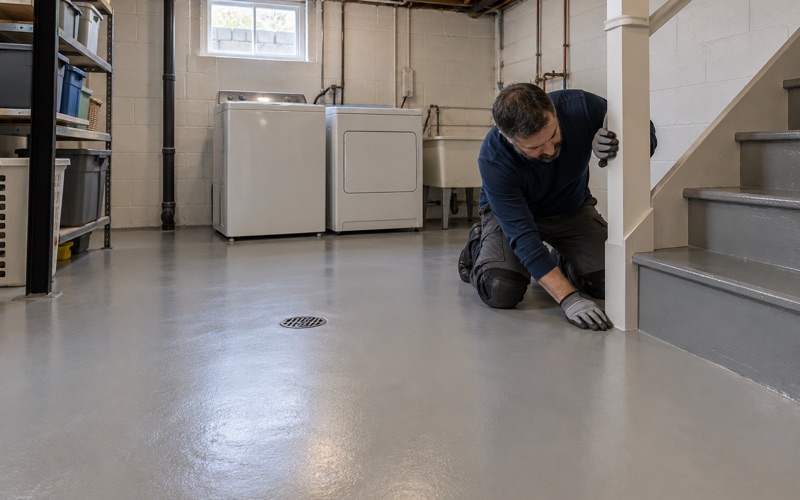
For a home gym in a garage or basement, the Illinois Home Repair and Remodeling Act applies once a job passes the state threshold. That means a written contract and the Home Repair: Know Your Consumer Rights pamphlet before any grinding begins. Whether the room is a two-machine home setup or a full commercial floor, the scope, the zones and the price are settled on paper first.
- 20+ Years of Floor Work
- Moisture Test in Every Scope
- Written Proposal, Named Products