
Des Plaines Epoxy Flooring provides concrete grinding and surface preparation in Des Plaines, IL, serving surrounding cities including Prospect Heights, Schiller Park, Bensenville, Wood Dale and Norridge. In more than 20 years of coating floors, we have found that the bond between a coating and the concrete decides how long the floor lasts, and that bond is made or lost during preparation, long before any coating is mixed.
We open every slab with a diamond grinder or a shot blaster rather than an acid etch. Mechanical preparation removes the weak top layer of concrete, strips old sealers and coatings, and leaves a clean, rough surface that a coating can lock into. It also shows us the real condition of the slab, including cracks, soft spots and hidden patches that a quick look would miss.
We grind floors for our own coating and polishing jobs, and we also prepare slabs for other trades and for owners installing tile, flooring or resurfacers. Whatever goes on top, the goal is the same: a sound surface at the right profile, free of anything that would break the bond.
Diamond Grinding and Shot Blasting
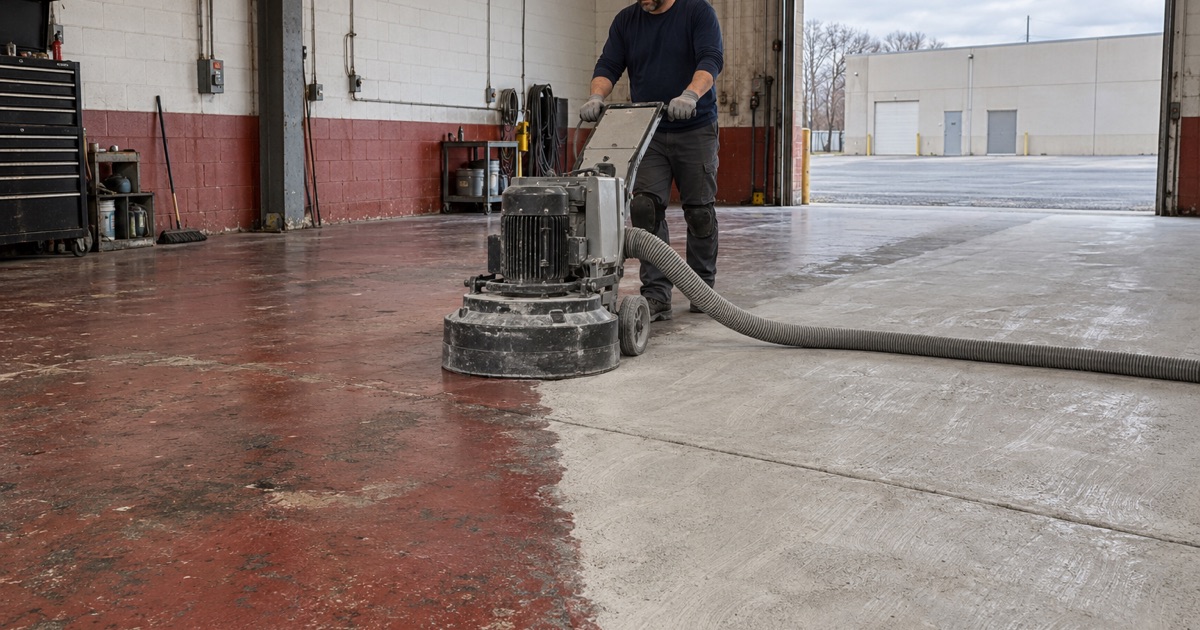
Diamond Grinding for Most Interior Floors
A planetary diamond grinder uses rotating heads fitted with metal-bond diamond segments to cut into the concrete surface. It flattens ridges, removes thin coatings and adhesives, and leaves a profile controlled by the grit and bond of the diamonds. Because it is precise and works right up to walls with edge grinders, it is our main tool for garages, basements and commercial interiors.
Grinding also flattens the floor as it profiles it. High spots, lips at joints and trowel marks are reduced, which matters for decorative systems such as metallic epoxy where every bump would show through.
Shot Blasting for Large and Heavily Contaminated Slabs
Shot blasting throws steel shot at the concrete, cleaning and roughening the surface in one pass, then recovers the shot and the debris into a vacuum. It is fast on large, open warehouse and industrial floors and produces a deeper, more open profile suited to thick coating systems and urethane cement. It is less precise at edges, so we finish perimeters with hand grinders.
Matching the ICRI Concrete Surface Profile
The International Concrete Repair Institute describes surface roughness on a scale from CSP 1, nearly smooth, to CSP 10, very rough. Thin coatings need a light profile, while thick mortars and broadcast systems need a heavier one. We prepare to the profile the coating manufacturer specifies and can check it against reference chips, so the profile is a measured result rather than a guess.
Preparing Slabs for Overlays, Tile and New Flooring
Not every ground floor gets one of our coatings. Cementitious overlays and self-leveling underlayments need a clean, open profile to bond, tile setters want old adhesive gone and high spots taken down to limit lippage, and many flooring adhesives fail over sealers and curing compounds. We grind to the profile each of those products calls for and leave the slab vacuumed and ready for the next trade.
Telling us what will go on the floor matters. A slab ground for a thin coating is too smooth for a heavy overlay, and a slab ground for an overlay is rougher than a thin coat can cover.
Removing Old Coatings, Glue and Sealers
Paint, Sealer and Failing Epoxy
Paint and sealers on garage and basement floors are a common reason new coatings fail, because the new coat bonds to the old film instead of to the concrete. We grind every trace off, including sealers that are invisible until water stops beading on them. Peeling epoxy is removed back to sound concrete, and edges are feathered so the new system has nothing loose underneath.
Tile Adhesive, Carpet Glue and Mastic
Old floors often hide layers of carpet glue, thinset and black mastic. Most of it can be ground off with the right tooling, though gummy adhesives load up diamonds and need specialized segments. Some older black mastic and floor tile can contain asbestos, so on floors of that age we ask about testing before any grinding starts rather than disturbing it blindly.
Oil, Grease and Contamination
Oil and grease soak into garage and shop slabs over years. We degrease, then grind through the contaminated surface and check whether oil keeps bleeding back. Heavily saturated areas may need repeated cleaning, a specialized primer or cutting out and patching, and we tell you which before quoting the coating.
Dust Control and Working Clean
Vacuums at the Machine
Grinding concrete produces fine dust containing crystalline silica. Our grinders, blasters and hand tools connect to industrial dust extractors with filtration, so dust is captured where it is made rather than swept up afterward. That protects the crew, your family or staff, and the rest of the building.
Detached Garages and Neighbors
For detached garages and alley-access properties, we stage equipment so driveways and neighbors stay open and keep the work area contained. Grinding debris is bagged and removed, never washed toward a storm drain or into the street, where it does not belong.
Occupied Commercial Buildings
In warehouses, offices and food facilities that keep operating, we seal off work zones, schedule grinding for nights and weekends where needed, and coordinate with facility managers on air handling and access. A section is ground, cleaned and handed to the next step before the following zone begins.
What Grinding Reveals About a Slab
Cracks, Spalls and Soft Concrete
Grinding exposes what was hidden. Hairline cracks, spalled joints, hollow-sounding patches and soft, dusty concrete all show once the top layer is gone. We map them and tell you which can be repaired before coating, and which mean the slab needs more work or replacement before a coating is worth applying.
Moisture Clues
Dark, damp areas after grinding and white efflorescence deposits point to moisture moving through the slab. We follow up with calcium chloride or relative humidity testing before recommending a coating, because a well-prepared surface cannot hold a coating down against vapor pressure from below.
- 20+ Years of Floor Work
- Moisture Test in Every Scope
- Written Proposal, Named Products