Des Plaines Epoxy Flooring installs epoxy garage floor systems for homeowners in Des Plaines, IL, serving surrounding cities including Prospect Heights, Schiller Park, Bensenville, Wood Dale and Norridge. We have spent more than 20 years turning dusty, salt-scarred garage slabs into sealed floors that wipe clean, and every one of them starts at bare concrete.
A garage floor takes more abuse than most floors in a house. Cars bring in snow melt laced with deicer, tires heat up on summer drives, and the slab underneath may have no vapor barrier at all. A coating has to be chosen and installed with all of that in mind, not just colored to match the cabinets.
That is why our quote comes after a look at your slab, a moisture reading and a crack map. The written proposal then lists the product line, how many coats go down and the finished thickness, so you can hold the floor to what we promised.
Why Garage Coatings Fail, and How We Prevent It
Coatings Rolled Over a Slick, Unprepared Slab
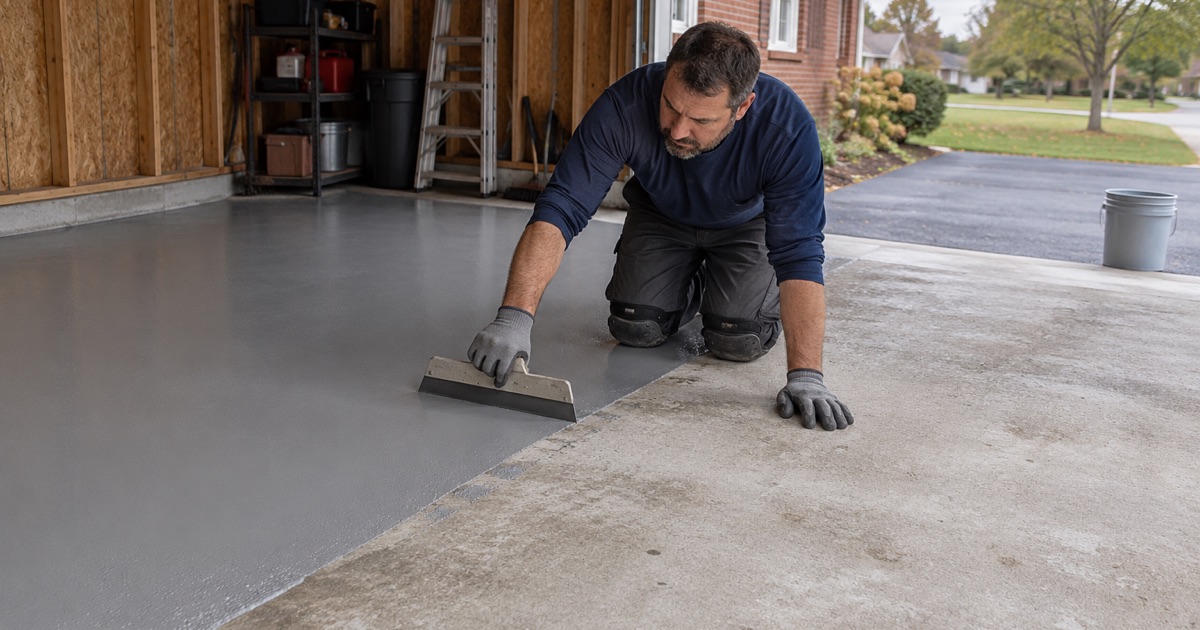
Most peeling garage floors failed at the bond, not in the coating itself. Paint and kit epoxy rolled over a smooth troweled slab, or over an old sealer, never grip the concrete. We diamond-grind or shot blast to an ICRI concrete surface profile that matches the product, so the base coat locks into open pores. Acid etching, the step most kits rely on, leaves an uneven profile and residue that has to be rinsed out of the slab, and it cannot remove a sealer at all.
That preparation also tells us what the slab is made of. Grinding exposes weak, dusty cream, hidden patches and old adhesive that a quick look misses, and we deal with each before coating.
Moisture Pushing Up From Below
Garage slabs are often built without a vapor retarder underneath, which the residential code allows. Moisture moving up through that concrete can blister a coating from below. We run a plastic sheet test or relative humidity probes before we price the job, and choose a moisture-tolerant primer when readings call for one.
Hot Tires and Thin Films
A thin coating softens under a hot tire and can lift away with the rubber as the car pulls out. We build garage floors with a 100% solids epoxy base and a polyaspartic or polyurea topcoat thick enough to carry a vehicle, rather than a single thin coat.
Thickness is written into the proposal for exactly this reason. A garage floor’s build is measured in mils, and a homeowner comparing quotes deserves to know whether one bid is twice the material of another.
Cleaning a Coated Garage Floor Through Winter
A coated garage floor is easy to keep, but salt left to dry on any floor dulls it over time. During winter we suggest squeegeeing melt water out the door every week or two, and rinsing with a neutral cleaner on a mild day. Rubber-backed mats under the car catch most of the brine before it spreads across the floor.
Skip harsh acids and citrus degreasers on the topcoat. They can haze the finish, and a pH-neutral cleaner removes salt residue without that risk.
Garage Floors in a Salt-Belt Winter
Brine, Rock Salt and Calcium Chloride
Every winter, brine and rock salt ride into the garage on tires and drip onto the slab. On bare concrete that salt water soaks in, freezes and thaws, and slowly scales the surface. A coated floor keeps it on top, where a squeegee and a hose can move it out the door.
We pick topcoats rated for deicer exposure and add enough texture that a wet, salty floor is not slick underfoot. A flake broadcast also hides the white residue that dries on the floor between cleanings.
Cold Slabs, Dew Point and Waiting to Coat
O’Hare, the nearest weather station, averages about 121 days a year at or below freezing, with the last spring freeze around mid-April. An unheated garage slab stays cold long after the air warms. We measure slab temperature and the dew point spread before coating, because coating a slab that is too cold or too close to dew point invites amine blush and weak bond.
When the numbers are wrong, we reschedule. Telling a January customer to wait until spring costs us a job now, but it saves them from a floor that fails by fall.
Detached Garages on Gravel Bases
In our area many garages stand on their own behind the house. The city’s detached-garage permit guide calls for a slab on a gravel base and names no vapor retarder, so those floors are tested for moisture like any other. We stage equipment so the driveway and the neighbors stay open and vacuum grinding dust at the machine.
Choosing an Epoxy Garage Floor System
Full Flake Broadcast Garage Floors
A full vinyl flake broadcast is the system most garages get. Colored chips are thrown into the wet base coat until it is covered, then the excess is scraped off and a clear topcoat locks the rest in place. The result hides dust, salt residue and small slab flaws, and its texture gives tires and shoes a little more grip.
Chip size and blend change the look. Small chips read as a fine granite speckle, larger ones as a bold terrazzo pattern, and lighter blends brighten a dim garage while darker ones hide grime between washes.
Solid Color and Quartz Garage Coatings
A solid color epoxy suits a workshop garage where dropped screws and fittings need to stand out against the floor. It shows tire marks sooner than flake, so we often recommend a satin topcoat to soften that. A quartz aggregate broadcast is the tougher alternative for a garage used as a shop, adding grit and abrasion resistance in one layer.
Epoxy Base With a Polyaspartic Topcoat
Most of our garage floors pair a 100% solids epoxy base with a polyaspartic topcoat. The epoxy builds thickness and bonds deeply into the ground slab, while the polyaspartic resists ultraviolet ambering from an open door and holds up to abrasion and deicer. Some systems use polyaspartic throughout for a faster return to service, and we explain the trade-offs of each before you choose.
Step 1: Inspection, Moisture Test and Crack Map
We walk the garage, map cracks, spalls, old coatings and oil stains, and test the slab for moisture. If the floor needs repair or replacement before it should be coated, we tell you then, not after the grinders are running.
Step 2: Diamond Grinding and Repair
The slab is ground to bare concrete, with dust captured at the machine. Cracks and spalls are filled with a repair material made to be coated, and edges are ground by hand along the walls.
Step 3: Base Coat and Broadcast
A 100% solids epoxy or moisture-mitigation primer goes down first, followed by a full vinyl flake or quartz broadcast if the system calls for one. Excess flake is scraped and vacuumed once the base has set.
Step 4: Topcoat
A polyaspartic or polyurea topcoat seals the broadcast and sets the sheen and texture. We apply it at the thickness written in the proposal.
Step 5: Cure and Return to Service
We give you walk-on and drive-on times based on slab temperature and the product’s cure, and a short care sheet for winter cleaning. Parking too early is the most common way a new floor gets marked, so we would rather add a day than guess.
Epoxy Garage Floor Cost and Coverage
What Changes the Price of a Garage Floor
Two garages of the same size can price very differently. Old paint or sealer to remove, deep cracks, a moisture-mitigation primer, full flake versus a light broadcast, and the topcoat chosen all move the number more than square footage does.
Warranty Terms We Explain Up Front
We walk through the warranty exclusions before you sign, and moisture vapor is the first one we name. Impact damage and some chemicals are usually excluded too. Knowing that in advance is the reason the moisture test is part of every garage quote.
On larger home jobs, the paperwork is part of the job as well. When a project crosses the state threshold, you get a written contract and the Illinois consumer-rights pamphlet before we start grinding.
- 20+ Years of Floor Work
- Moisture Test in Every Scope
- Written Proposal, Named Products