Des Plaines Epoxy Flooring has spent more than 20 years on epoxy flooring in Lake Zurich and the rest of the northwest suburbs, and the floors that test a coating hardest are the ones that never dry out. A pool deck, a shower corridor or a chemical room asks a resin system to grip bare feet, shrug off sanitizers and hold its bond over damp concrete, all at once.
That is why we choose the system by exposure before anyone opens a color chart. Texture, chemical resistance and moisture tolerance decide whether a wet-area floor lasts, and a beautiful finish that turns slick under a wet heel has failed at the one job that matters. Color is the easy decision, so we make it last.
This page walks through how we approach wet, warm and chemically exposed floors in the village: what an indoor aquatic setting does to concrete, why the mechanical side of a pool building is its own project, and how a deck gets closed, ground, coated and cured without guesswork. Garage and basement owners will find the same testing habits apply to their slabs.
An Indoor Aquatic Center on Rand Road
Lake Zurich now has a full natatorium inside village limits, and it is a useful example of the floor conditions we plan around. We have not worked or bid there, and we have not inspected its finishes, so what follows describes the type of space rather than that building’s floors.
Life Time Lake Zurich at 400 N. Rand Road
Life Time Lake Zurich officially opened on September 23, 2022, at 400 N. Rand Road, which sits inside the village in Ela Township. The club describes nearly 148,000 square feet on three floors, built on the former Hackney’s restaurant site at U.S. 12 and Old Rand Road. Its indoor aquatic area holds a leisure pool plus adult and kids lap pools for lessons and open swim.
The same club lists an outdoor beach club and dressing rooms with whirlpools, saunas and steam rooms. Put together, that is a building where large stretches of floor stay wet for most of the day, carry bare feet and sit in warm, moist air. It is the clearest local illustration of why a natatorium floor is specified differently from a garage or a showroom.
Barefoot and Wet All Day: Texture Before Color
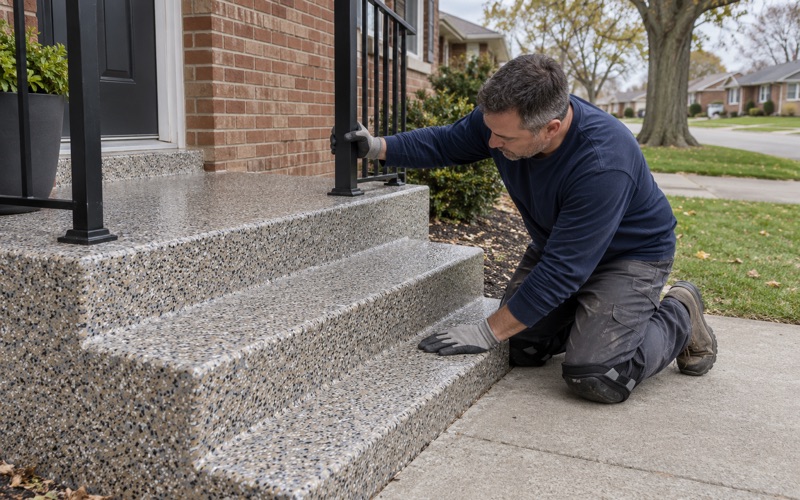
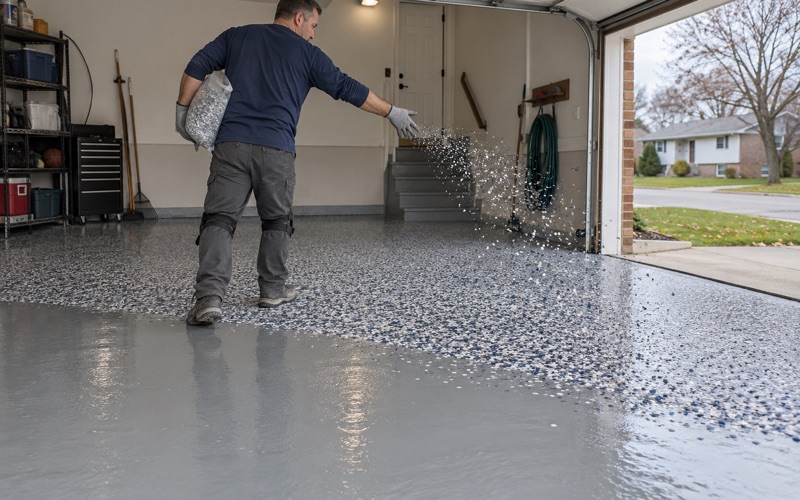
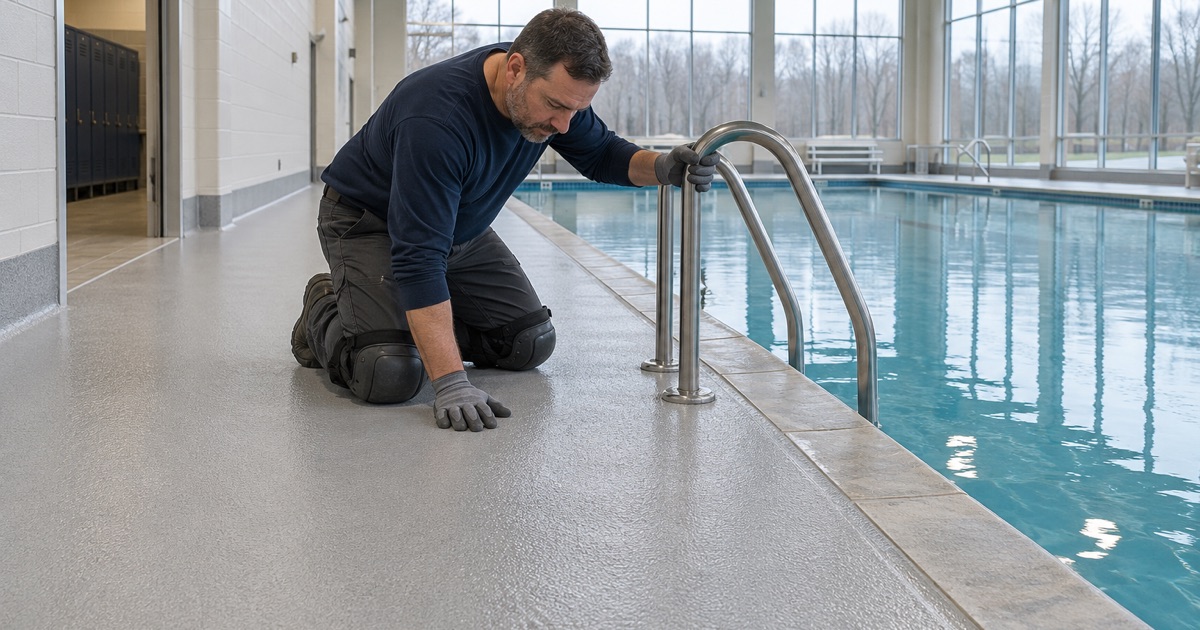
A shoe sole spreads a wet surface and grips through tread, while a bare foot has nothing to channel water away. On a pool deck, the finish itself has to provide that grip, which usually means a broadcast aggregate locked into the resin rather than a smooth, glossy film. We typically look at quartz aggregate broadcast for this kind of exposure.
The grit size and the number of topcoat passes set how aggressive the texture feels underfoot. Too fine and a soapy heel slides, too coarse and the floor is hard to clean and rough on skin. We lay sample boards so an owner can stand on them barefoot and wet before a single bag of aggregate is ordered, since that trial settles more than any spec sheet.
Looking for epoxy-flooring closer to Brookfield? See Epoxy-Flooring Services in Brookfield.
Warm, Humid, Chlorinated Air and What It Does to a Floor
An indoor pool room keeps the air warm and heavy with moisture, and that air carries the disinfecting chemistry used in the water. A coating there is attacked from above by condensation and splash, and it can be pushed from below by moisture moving up through the slab.
Moisture From Both Directions
Concrete on grade wicks moisture upward, and a sealed resin film can trap that vapor until it lifts in blisters. Before we price a wet-area floor, the scope names a moisture test, usually ASTM F2170 in-situ relative humidity probes, sometimes paired with ASTM F1869 calcium chloride readings. Where results run high, we plan a moisture-mitigation primer instead of hoping the film will hold.
We also ask what sits under the slab. A missing or damaged under-slab vapor retarder changes the whole system, and it is far cheaper to learn that from a probe than from a deck that bubbles a season later. Moisture is the first exclusion we explain on any coating warranty, and on a pool deck we explain it twice.
Chemistry the Topcoat Has to Tolerate
Pool water treatment, cleaning products and body oils all land on the deck, and they settle into any softer or porous finish. A 100% solids epoxy base gives a dense, thick layer, and we commonly seal it with a polyaspartic or polyurea topcoat chosen for its resistance to the cleaners the owner actually uses. Urethane cement is the alternative where wet heat and thermal swings are severe.
We ask a facility for the product labels of its deck cleaners and pool chemicals before selecting a topcoat, rather than guessing at the chemistry. That list goes into the written proposal next to the product line, the number of coats and the finished thickness, so a manager can check the installed floor against what was quoted.
Dew Point at the Slab Surface
Humid rooms make cure conditions harder to control. If the slab surface drops near the dew point, moisture condenses on fresh resin and leaves amine blush, a waxy film that weakens the bond of the next coat. We measure the dew point spread at the slab itself, and the cure schedule follows those readings rather than the calendar.
That often means asking the building to hold air handling steady and keep pool covers or doors managed while we work. When the readings will not cooperate, we wait. A deck coated a day late beats a deck that peels across its first summer of heavy use.
Pool-Chemical and Pump Rooms Are a Different Floor
The rooms behind a pool, where chemicals are stored and pumps and filters run, rarely see bare feet but see far harsher exposure than the deck. We treat them as a separate scope with their own system, even when they share a slab with the public areas.
Chemical Splash and Spill Exposure
Concentrated treatment chemicals can attack a floor in minutes where a diluted splash on the deck would take years. In a storage or dosing room, we look at chemical-resistant epoxy formulations and thicker builds, carried up the wall as a coved base where spills would otherwise run under the edge. Texture still matters for staff, but it is tuned for work boots, not bare skin.
We ask which products are stored, in what containers and how deliveries arrive, because a dropped drum or a dragged pallet jack tests the floor too. Those answers decide the resin, the build thickness and whether the room needs a different topcoat than the deck it sits beside.
Pumps, Drains and Constant Water
Mechanical rooms are often wet from condensation, filter backwashing and equipment maintenance. Before coating, we check that the floor slopes toward its drains and map any cracks, spalls and old coating, so repairs happen first. If a slab needs patching or replacement before it should be coated, we say so in writing rather than burying the problem under resin.
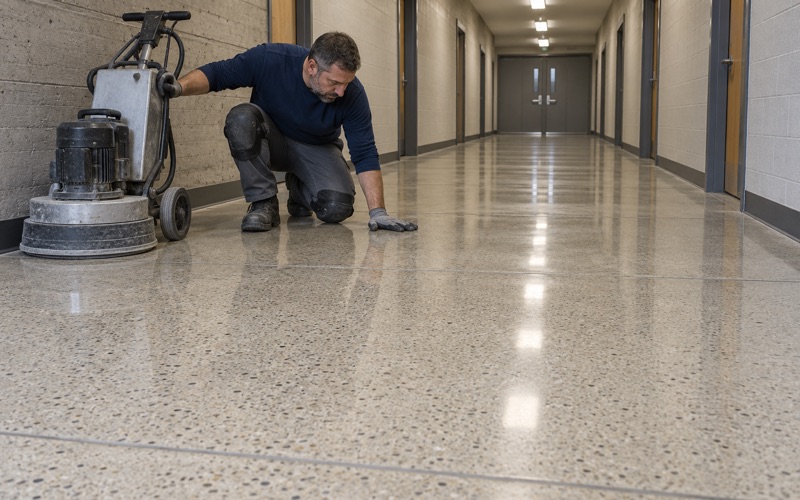
Every slab is opened with a diamond grinder or a shot blaster to a measured ICRI concrete surface profile. We never rely on an acid etch to give a coating something to hold, and in a room already full of chemistry that rule matters even more.
The Dry Side of the Building
Not every floor near a pool is wet. Corridors, a cafe or a spa reception area may need a smoother, decorative finish, and running the deck system through them can be more texture than anyone wants. We draw the boundary between wet and dry zones on the plan so each area gets the system its exposure calls for.
Closing a Pool Deck for a Coating Cure
A natatorium cannot coat its deck around open swim. The work has to fit a planned closure, and that closure needs to cover preparation, application and a real cure before water and feet return.
Scheduling the Closure
We build the schedule backward from the day the deck must reopen. Grinding, crack repair, base coat, aggregate broadcast and topcoat each need their own window, and the cure times come from slab temperature and dew point readings taken on site. Commercial floors can be phased around operating hours, with overnight and weekend windows when the building cannot fully stop.
Dust control is part of the plan from the first pass. Grinding dust is vacuumed at the machine rather than washed toward a drain, which matters doubly in a building where drains lead to pool equipment. Products are selected within the Illinois VOC limits for floor and industrial coatings, which apply to us as the applicator.
Permits in Lake Zurich
Commercial projects in the village go through the Village of Lake Zurich Building and Zoning Division, part of the Community Services Department. Permit applications are submitted by e-mail, and most are currently taking up to 15 business days to process. We ask the division whether a given coating job needs a permit before the job is booked, instead of assuming the answer.
Illinois has no state flooring license, so we also confirm the village’s contractor registration, bond and insurance requirements ahead of time. That lead time goes on the schedule before a closure date is promised.
What Homeowners Can Borrow From a Pool Deck
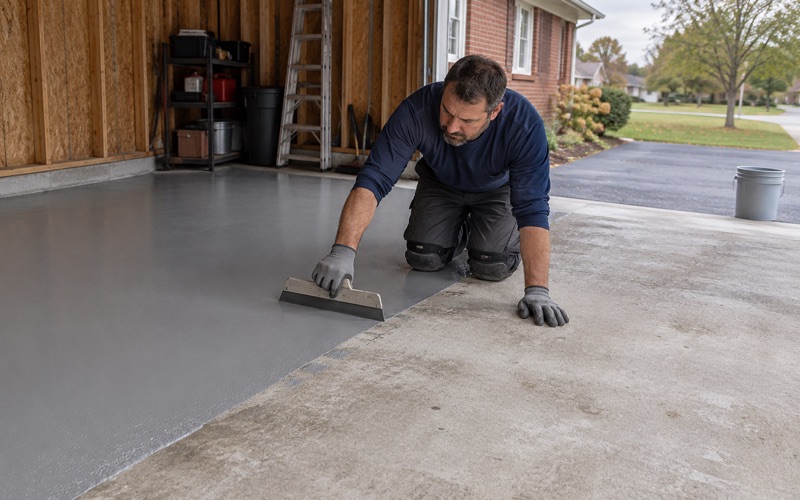
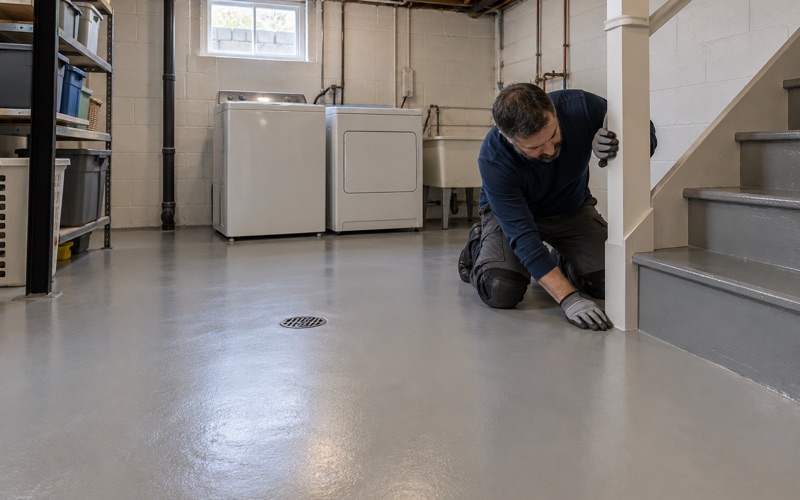
The same habits carry over to a Lake Zurich garage or basement. A wet basement floor gets a moisture test before a price is final, and we never sell a coating as waterproofing. Home jobs over the state threshold come with a written contract and the Illinois consumer-rights pamphlet before any grinding starts, and the proposal states the product, coats and thickness so you can hold us to it.
- 20+ Years of Floor Work
- Moisture Test in Every Scope
- Written Proposal, Named Products