Des Plaines Epoxy Flooring brings more than 20 years of epoxy-flooring work to Lyons, and the floors that test that experience hardest here are the cold ones. A freezer room cannot be coated the way a garage is coated, because the room has to stop being a freezer first. That single fact shapes the schedule, the product and the price long before anyone opens a can.
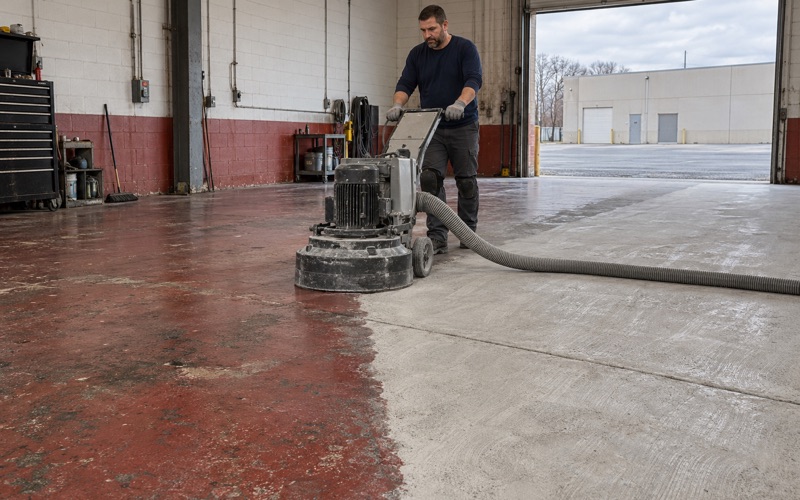
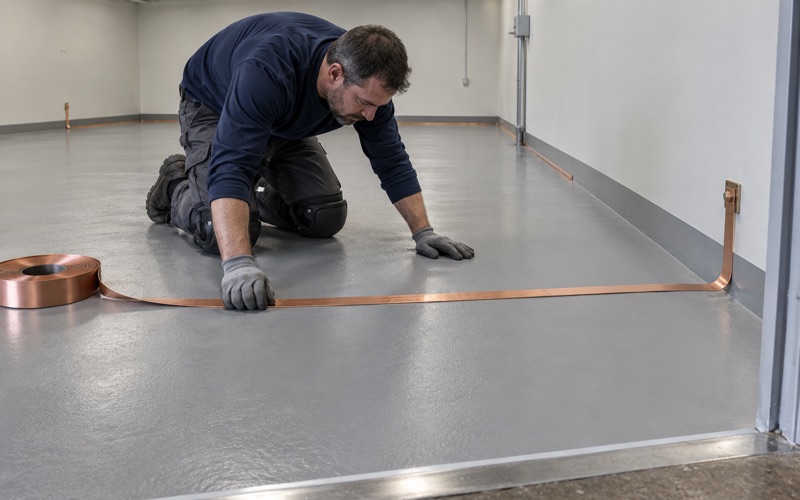
Most of what we do anywhere starts the same way. We open the slab with a diamond grinder or a shot blaster instead of an acid etch, we map cracks, spalls and old coating before quoting, and we write a moisture test into the scope. On a cold-storage floor, each of those steps has to fit inside a window the building owner controls.
This page walks through how a federally inspected freezer room gets a new floor: what the sanitation rule asks of the surface, why ordinary epoxy fails in the cold, and how a planned shutdown or a cold-curing system gets chosen. The answer is rarely one product. It is a sequence agreed with the plant.
A USDA-Inspected Freezer on 47th Street
Lyons is a village in Cook County, inside Lyons Township, with 10,817 residents at the 2020 census. Its north side along 47th Street carries more working floor area than a community that size might suggest, and one address there shows why cold-storage flooring belongs on a Lyons page at all.
The village was incorporated in 1888 and is home to the Chicago Portage National Historic Site, north of I-55 along Harlem Avenue. Manufacturing work such as Electro-Motive and Reynolds Aluminum has dried up over the years. The buildings along 47th Street still carry a mix of uses, though, and at least one of them runs cold.
What the federal directory lists at 8424 W. 47th Street
Mistica Foods LLC holds a USDA Food Safety and Inspection Service grant at 8424 W. 47th Street, dated March 24, 2022, under establishment number M48098A+P48098A+V48098A. The activities listed for that grant are off-premise freezing of meat and poultry, meat and poultry identification, and export certification. The FSIS directory classes the establishment as small.
We have not been inside that building, and we have not read its room temperatures or its existing floors. What the public listing does tell us is the category of floor a federally inspected freezing operation lives with, and the rules that come attached to it. The rest of this page is about that category, not about any one owner’s rooms.
Why inspection status changes the floor conversation
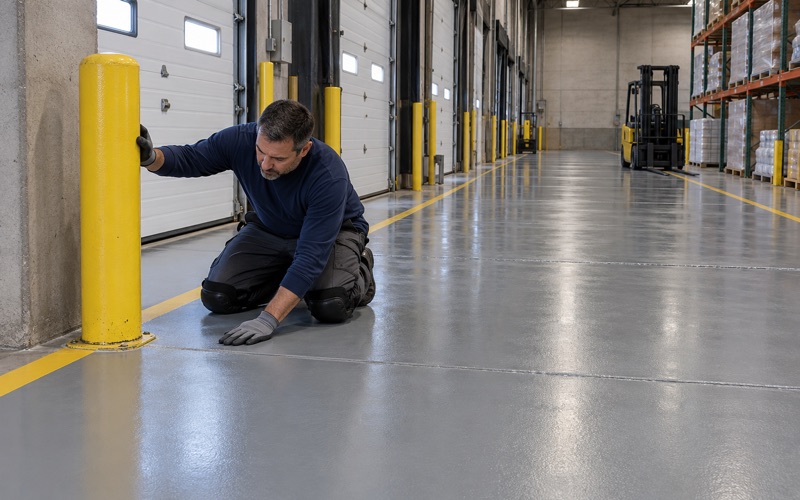
In an ordinary warehouse, a worn traffic lane is a maintenance item that waits for a budget. In an establishment operating under FSIS inspection, the same worn lane can be read as a sanitation problem, because the floor is part of what keeps product from being adulterated. That moves the floor from cosmetic upkeep to something an inspector may write up.
It also changes who sits at the planning table. A floor job in a federally inspected room involves the plant manager, whoever runs sanitation, and often the person who keeps the inspection calendar. We plan for that from the first walk-through, phasing work around shifts and dock schedules and offering overnight or weekend windows when the building cannot simply stop.
Looking for epoxy-flooring closer to Western Springs? See Epoxy-Flooring Services in Western Springs.
What Federal Sanitation Rules Say About Floors
The federal sanitation performance standards for meat and poultry establishments sit in 9 CFR 416.2. Two lines in that section matter most to anyone choosing a floor system, and neither of them names a product, a brand or a coating type. They describe how the finished surface has to behave.
Impervious to moisture, kept in good repair
Paragraph (b)(2) says walls, floors and ceilings within establishments must be built of durable materials impervious to moisture and be cleaned and sanitized as necessary to prevent adulteration of product or insanitary conditions. Paragraph (b)(1) adds that buildings, rooms and compartments must be of sound construction and kept in good repair. Bare, porous concrete has a hard time meeting both for long.
The rule sets a performance, not a product list. No coating carries a federal approval of its own, and we never sell one as if it did. What we can do is specify a seamless, non-porous system at a stated thickness, name the product line and number of coats in the written proposal, and let the owner check the finished floor against that paper.
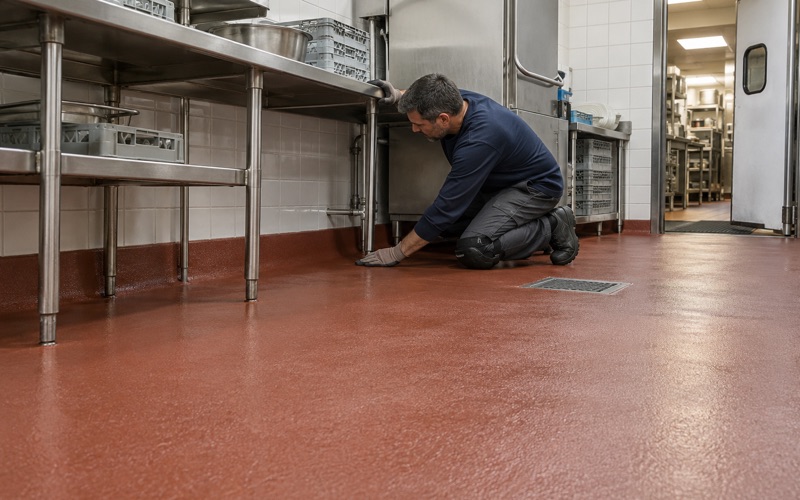
Where the floor meets the wall is where sanitation crews spend the most effort. A coved base carried up the wall as part of the floor system removes the square corner where water and debris collect. Floor drains need the same care, since the coating has to terminate cleanly into the drain body rather than stop short and leave a raw concrete ring.
Where floors in cold rooms tend to give way
Cold rooms are hard on concrete in ways a dry warehouse is not. Washdown water works into hairline cracks, door thresholds take a temperature swing every time a door opens, and pallet jack wheels grind the same lanes all day. A coating that has lifted at an edge can hold water beneath it, which is the opposite of what the rule asks.
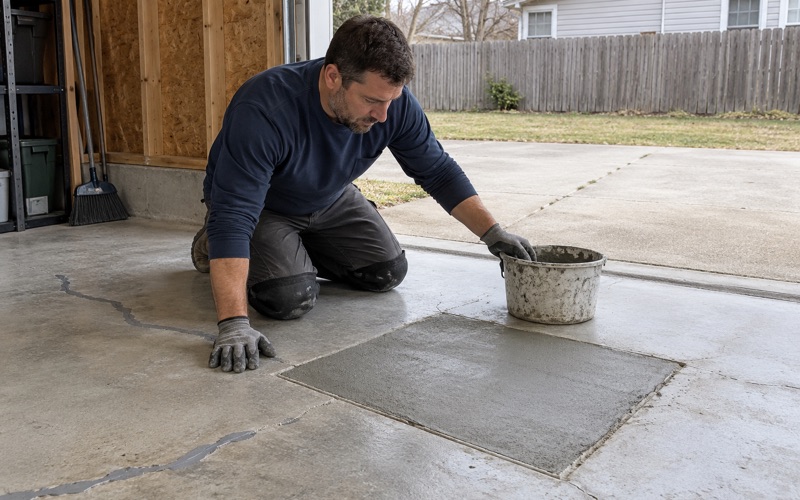
Before any product is discussed, we map cracks, spalls, joints and old coating on the slab and say plainly when a section needs repair or replacement rather than a topcoat. A coating laid over a broken slab only hides the break for a season. In a room held to a moisture standard, hiding a defect is a poor trade for anyone.
Why a Running Freezer Cannot Be Coated
This is the part of cold-storage flooring that surprises owners most often. A freezer running at temperature is not a place where a standard floor coating can be installed, no matter how good the crew is or how fast the product claims to be. The chemistry simply does not cooperate at those temperatures.
What cold does to standard epoxy
Epoxy cures through a chemical reaction that slows sharply as temperature drops. One resin-flooring manufacturer puts it bluntly: standard epoxy coatings installation doesn’t cure properly in cold environments. An under-cured film can stay soft, bond poorly and show amine blush, a waxy surface film that weakens the next coat. We set cure times by slab temperature and dew point, never by the calendar.
The same maker notes that cold storage facilities need to remain cold and are typically filled with things that can’t be warmed up. That is the real constraint on the job. The product question and the inventory question turn out to be one question, and the people who own the inventory have to answer it before we choose a resin.
Empty, warm, prep, coat, cure, pull down
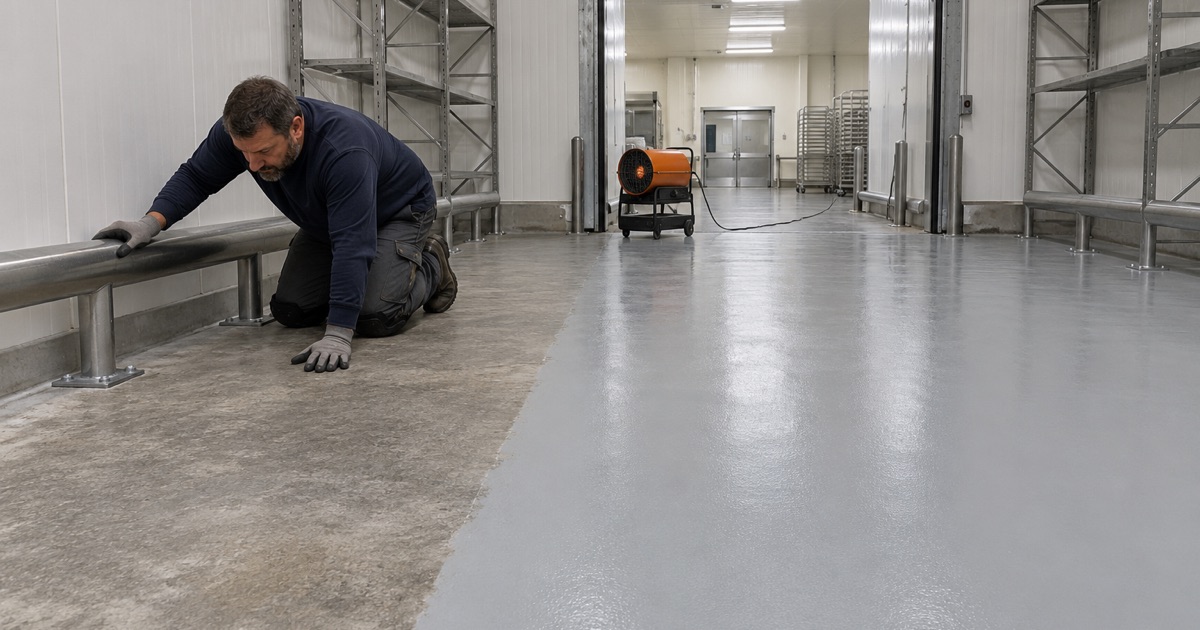
When a standard 100% solids epoxy system is the right answer, the work runs as a planned shutdown. The room is emptied, the refrigeration is shut off and the space is brought up to a temperature the product can cure at. Only then is the slab ground or shot blasted to a measured surface profile, cleaned and tested for moisture.
Warming a frozen slab adds its own risk. Condensation can form on cold concrete as warmer air reaches it, so we track the dew point spread at the slab surface and the slab’s own temperature before any primer goes down. A floor coated over a damp surface tends to fail at the bond first, usually where traffic is heaviest.
Coating follows, then a full cure at temperature, and only after that is the room pulled back down. Pull-down is not instant, and a room chilled too fast can stress fresh resin and the slab beneath it. We put every stage of that sequence on a written schedule so the plant can plan product moves around it.
Moisture testing in a slab that has been cold
Moisture testing does not go away because the room is cold. We use ASTM F2170 in-situ relative humidity probes or ASTM F1869 calcium chloride tests, chosen to suit the slab and the schedule, and read the results against the product maker’s limits. A freezer slab may also sit over insulation and a vapor barrier we cannot see, so we ask for drawings when they exist.
An inspected establishment does not choose its downtime in isolation, either. Product has to be relocated, sanitation has to restart once the floor is cured, and the operating calendar has to absorb a room that is off line. We agree the order of work with the plant and fit it to its inspection and production schedule before a product is picked.
Cold-Curing Systems and When They Make Sense
Sometimes a full warm-up is not possible. A room may be the only freezer space a business has, or the inventory may have nowhere else to go for the days a full cure takes. That is where cold-curing product classes earn a place in the conversation, alongside the shutdown plan rather than instead of careful preparation.
Polyaspartic and urethane concrete
The same manufacturer describes polyaspartic and urethane concrete coatings as quick curing, even in chilly to very cold temperatures, and describes urethane concrete as thermal-shock resistant. Those traits suit a freezer, where washdown water and cold air meet at the same surface. Urethane cement systems are generally applied thicker than a thin epoxy film, which also helps under pallet traffic.
Cold-curing does not mean skipping preparation. The slab still has to be opened mechanically, cracks still have to be repaired, and moisture still has to be measured. We still write the product line, coat count and finished thickness into the proposal, because a cold-cure system installed too thin is no better than an epoxy that never cured.
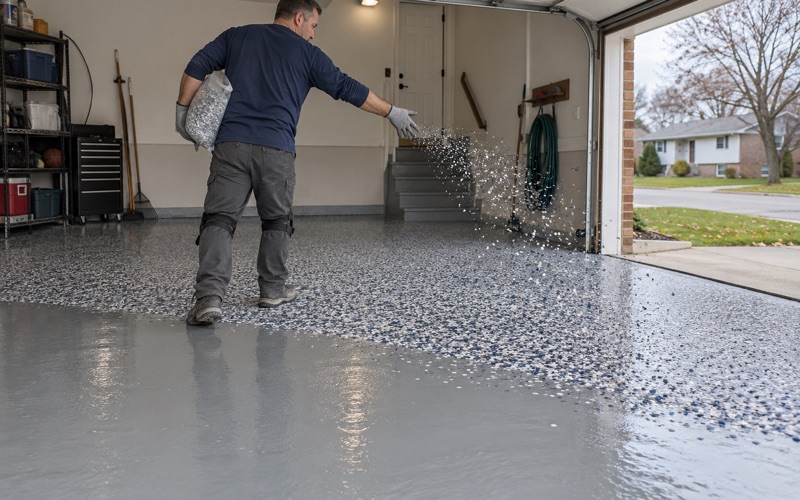
Texture matters as much as cure speed. A wet freezer floor can be slippery, so we often broadcast quartz aggregate into the system and lock it under a topcoat, balancing grip against how easily the floor can be scrubbed. Too coarse and sanitation crews fight it every shift, while too smooth turns the washdown into a hazard.
Questions settled before a product is named
The choice between a warm-up shutdown and a cold-curing system turns on a short list. How long can the room be off temperature, and where does the inventory go in the meantime? What traffic crosses the floor, and what cleaners and washdown routine does it see? Those answers usually narrow the field to one or two systems before price enters it.
We also explain what a coating warranty excludes before the job is sold, and moisture is the first exclusion we name. Slab movement at cracks a coating was never meant to bridge is another common one. An owner who knows the exclusions can plan maintenance around them instead of discovering them after a failure.
Whatever the system, we ask the Village of Lyons Building Department at 4200 Lawndale Avenue whether a coating needs a permit rather than assuming either answer. Products are selected inside the Illinois VOC limits for floor and industrial coatings, and grinding dust is collected at the machine rather than washed toward a drain, which matters in a room that will be sanitized again within days.
- 20+ Years of Floor Work
- Moisture Test in Every Scope
- Written Proposal, Named Products