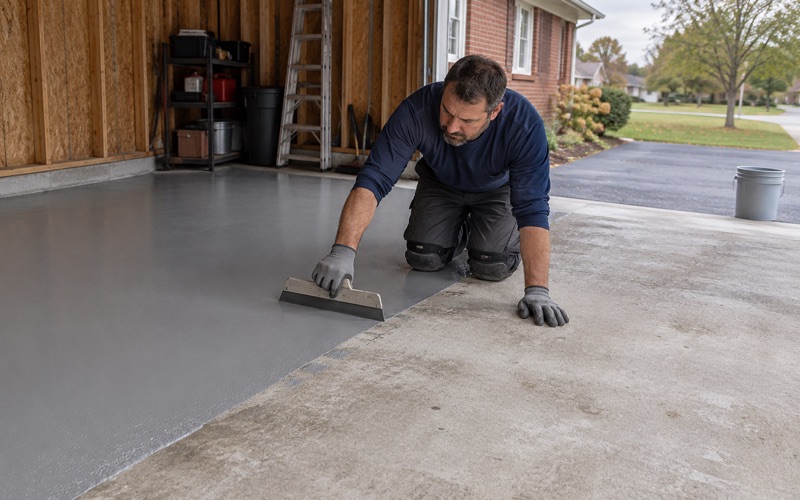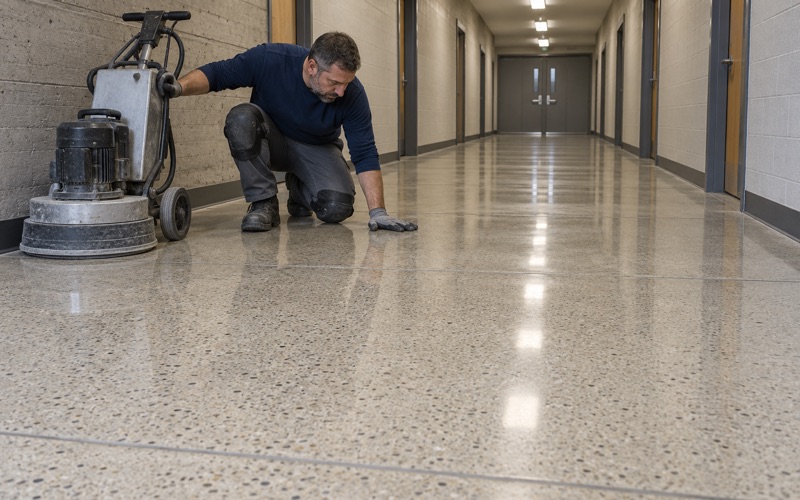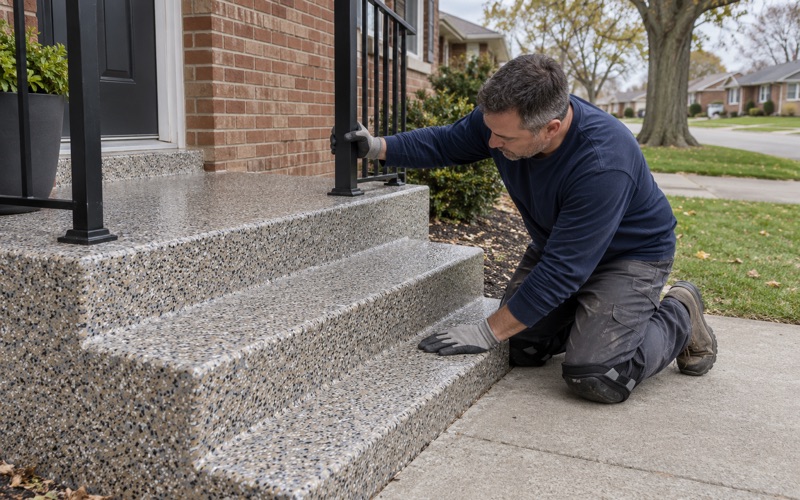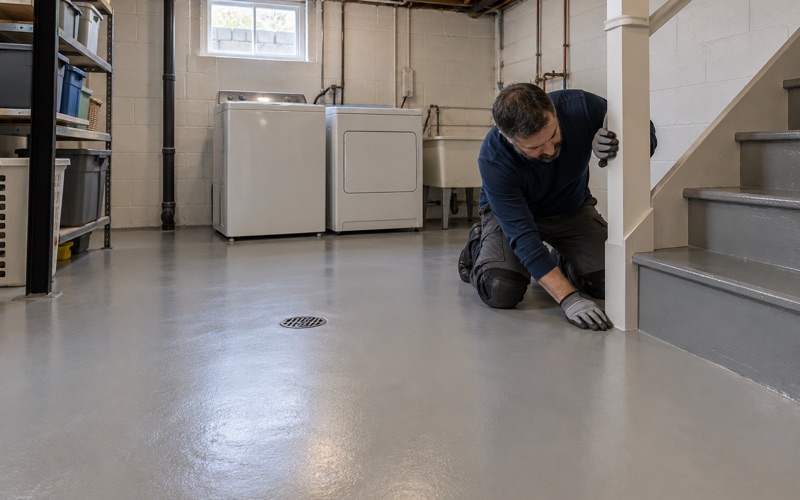
Des Plaines Epoxy Flooring has spent more than 20 years on epoxy flooring in River Grove and the surrounding suburbs, and the floors that teach us the most are the ones that take chemistry every working hour. A salon, a barbershop or a nail station is exactly that kind of floor. Color drips, solvents splash, water runs and the broom never stops, so the coating has to hold up to housekeeping as much as foot traffic.
That changes how we price and plan a job. We start with the finish a shop owner will have to keep clean, then work backward to the primer, the build coats and the slab underneath. A light floor that looks sharp on opening day and shows every dye spot by the third month is a failed floor, whatever the brochure promised about it.
This page walks through what a salon floor asks of a coating, why a pale color raises the stakes, how a wet shampoo area differs from the rest of the room, and what the same thinking means for a home salon chair or a barber setup in a River Grove basement. Garages and storage floors follow the same preparation, with a different topcoat.
A new salon lab at Triton College, and what lands on its floor
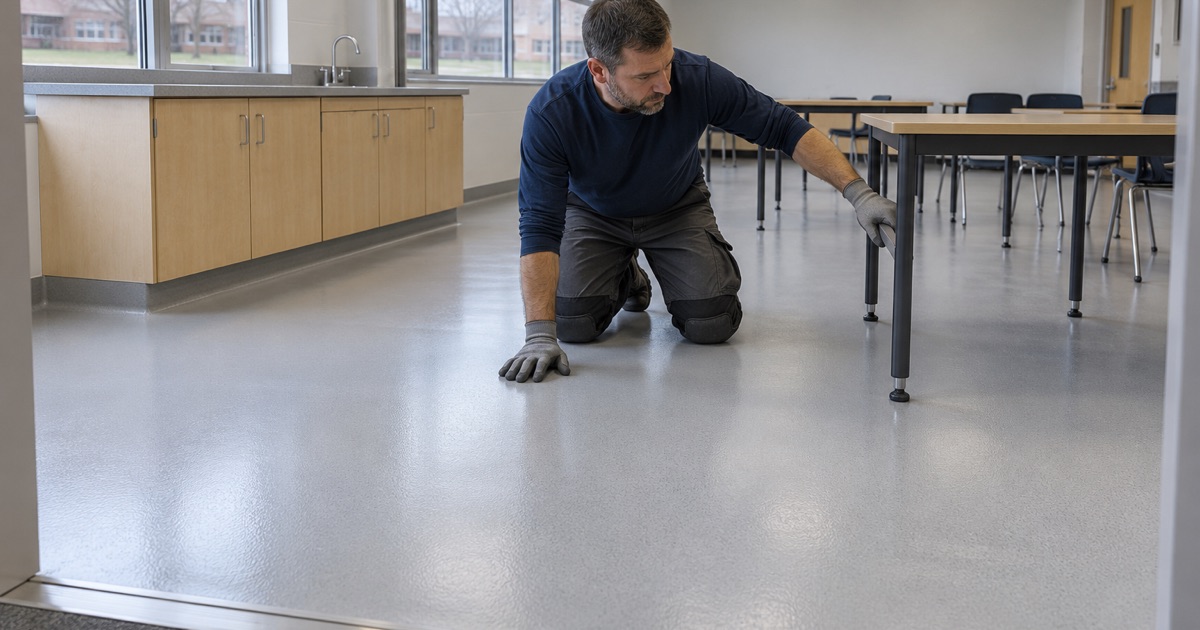
River Grove is a village in Leyden Township, Cook County, and Triton College, at 2000 N. 5th Avenue, sits inside the village line. In summer 2025 the college finished a new barber and cosmetology lab in Room M-150 of its M Building. The college describes 20 salon and barber stations, a wash house for shampooing, a manicure and pedicure area, a skincare room and white floors.
The lab is also open to community appointments, so it works as a real salon with paying clients rather than only a classroom. We have not worked on that floor, and the college did not state what the floor is made of. We point to it because it shows the River Grove salon trade clearly: a busy room of chairs, sinks and nail tables on a pale floor.
Color and developer at the chair
Hair color and developer stains are the first hazard on any salon floor. Color is mixed in a bowl, carried to the chair and applied over a cape, and some of it reaches the floor no matter how careful the stylist is. Developer is a peroxide product, and dye left sitting on a soft or porous surface can set into it before the next client sits down.
On bare or sealed concrete those drops wick into the pores. On a thin, low-solids coating they can etch or ghost into the film. What decides the outcome is how dense and chemically tight the top layer is, and how quickly the shop wipes a spill. We cannot promise any finish takes dye forever, but the right topcoat buys real time.
Polish remover and nail solvents
The manicure and pedicure area brings a different chemistry. Acetone and other nail-polish removers are strong solvents, and they soften some floor finishes on contact, leaving a dull or tacky ring where a bottle tipped. Polish itself dries hard and has to be scraped or dissolved, which puts more solvent on the floor than the original spill did.
For that zone we look harder at solvent resistance than at color. A polyaspartic or polyurea topcoat over a 100% solids epoxy body coat is a common answer, but we match the product to the actual solvents the shop uses. We ask for the product labels before we write the proposal, because a guess about chemistry is how a floor gets the wrong finish.
Clippings, brooms and constant sweeping
Hair clippings land all day and get swept all day. Illinois salon rules say clippings cannot accumulate and must go into a covered container, so a broom or dust mop crosses the same paths dozens of times a shift. That steady abrasion dulls a soft gloss fast, especially around the chair bases where wheels and footrests pivot.
A quartz or fine aggregate broadcast under the topcoat adds wear resistance and a little grip without making the floor hard to sweep. The texture has to stay fine enough that hair does not lodge in it. We lay out sample boards so an owner can drag a broom across them before anything is coated.
Looking for epoxy-flooring closer to Lincolnwood? See Lincolnwood Epoxy-Flooring.
Why a white floor makes the topcoat the whole job
A dark gray floor forgives a lot, and a white or pale floor forgives almost nothing. Every dye drop, solvent ring, scuff and amine blush haze reads from across the room. That is why, on a light salon floor, the topcoat choice is the specification and the color is close to secondary.
Stain resistance starts with the surface underneath
A stain-resistant topcoat only works if it is bonded tight and built to the right thickness. We open the slab with a diamond grinder or shot blaster to a measured ICRI concrete surface profile, and we never lean on an acid etch. Then we map cracks, spalls and old coatings, and we tell an owner plainly when a floor needs repair before any coating goes down.
Moisture matters even more on a pale floor, because vapor pushing up through the slab can discolor or blister a film. A moisture test is written into our scope before the price is final, usually an ASTM F2170 relative humidity probe or an ASTM F1869 calcium chloride test. If the slab is wet, a moisture-mitigation primer goes into the quote, not a surprise change order.
Yellowing, blush and cure conditions
Many epoxies amber under light over time, and on a white floor that drift shows. We usually top a light epoxy body coat with an aliphatic polyaspartic or urethane layer that holds its color better. Amine blush, a waxy film that forms when epoxy cures in cool, damp air, also shows plainly on a white floor and weakens the bond of the next coat.
So we set cure windows by slab temperature and the dew point spread at the surface, not by the calendar. A salon in a strip building with the heat set back over a weekend can fall into blush territory overnight. We would rather move the schedule than hand a shop a cloudy floor it has to look at every day.
Checking the floor against the quote
Our written proposal names the product line, the number of coats and the finished thickness, so a shop owner can hold the floor up against the paper. That matters on a salon job, where the difference between a thin roll coat and a full build is invisible on day one and obvious a year later. We also explain what the warranty excludes before the job is sold, and moisture is the first exclusion we name.
The wash house and the Illinois floor rule
The shampoo area behaves like a separate room even when it shares the same floor. Bowls overflow, rinse water runs off capes, and the floor near the sinks stays damp for most of the day. The rest of the salon may be dry, but that corner is a wet room and needs to be built like one.
Building the wet corner
Around a shampoo bowl we look at slip resistance first. A fine aggregate in the topcoat gives wet footing without leaving a rough surface that holds hair and residue. Where the floor meets the wall or a sink base, a coved or tightly sealed edge keeps water out of the seam, because standing water at an open joint is where coatings lift and where grime collects.
We also check the slab under the sink line closely during the moisture test. A plumbing leak that has soaked the concrete for years reads very differently from the dry slab across the room. If one area runs wet, we treat it on its own, with mitigation or repair, rather than pricing the whole floor as if it matched.
What Illinois salon rules actually say
The Illinois sanitary standards for salons and shops, 68 Ill. Adm. Code 1175.115, require floor surfaces to be kept clean, orderly and in good repair. The same section says shampoo bowls and sinks must be clean and free of hair and residue after each use, and that a shop needs continuous hot and cold running water. Those rules shape how often a salon floor is mopped and how hard it is scrubbed.
The rule does not require epoxy or any coating, and we would never tell a shop owner it does. What it requires is a floor that stays clean and in good repair, and a seamless, chemically tight coating is one practical way to meet that. A cracked, stained or peeling floor is harder to keep in that condition, whatever it is made of.
A home salon or barber chair in a River Grove basement
Not every chair in the village sits in a storefront. Some stylists and barbers cut from a room at home, and in River Grove that room may well be a basement. The same chemistry applies, with older concrete and a homeowner’s budget in the picture.
Older slabs and moisture below grade
River Grove’s housing skews old. Of 4,573 housing units, 762 were built in 1939 or earlier, and about 44 percent predate 1960, so many basement slabs here were poured without an under-slab vapor retarder. Some of those floors are dry and sound, others carry efflorescence, old paint or patched cracks, and we test each one rather than assuming either way.
We never sell a floor coating as waterproofing, and a basement that has taken sewer water needs the drain, the backwater valve and full drying handled before we coat. A coating is not radon reduction either, because in Illinois that is licensed mitigation work. Once those questions are settled, a home salon floor gets the same stain and solvent thinking as a commercial one.
Contracts, permits and village registration
For home jobs over the state threshold, we provide a written contract and the Home Repair: Know Your Consumer Rights pamphlet under the Illinois Home Repair and Remodeling Act before any grinding starts. Illinois has no state flooring license, so we check each town’s own contractor rules before booking.
In River Grove, contractor licenses run January 1 to December 31 regardless of when they are issued, with a $10,000 trade-specific bond and a certificate of liability insurance naming the village. The village also says remodeling valued over $100 needs a building permit. We ask the Building Department at 2621 N. Thatcher Avenue whether a coating job needs one, rather than assuming the answer.
Scheduling around a working chair
A home stylist loses income on every day the room is closed, so we plan the grind, coats and cure as one tight sequence. Grinding dust is vacuumed at the machine rather than rinsed toward a floor drain. Products are selected inside the Illinois VOC limits for floor coatings, which matter even more in a basement with limited fresh air during the cure.
- 20+ Years of Floor Work
- Moisture Test in Every Scope
- Written Proposal, Named Products