Des Plaines Epoxy Flooring has spent more than 20 years on epoxy flooring in Schiller Park and the warehouse corridor around it, and the floors that teach us the most are the ones where something extremely cold meets a coated slab. A packing bench where liquid nitrogen is poured or dry ice is broken up puts a kind of stress on a floor that forklifts and foot traffic never do.
That stress has a name in our trade: cold shock. A small patch of floor is chilled so fast that the coating contracts before the concrete beneath it can follow, and a thin, rigid film can crack or lift at the edge of the spill. Choosing a system that tolerates that, and keeping the surface seamless enough to clean, is the real decision on these jobs.
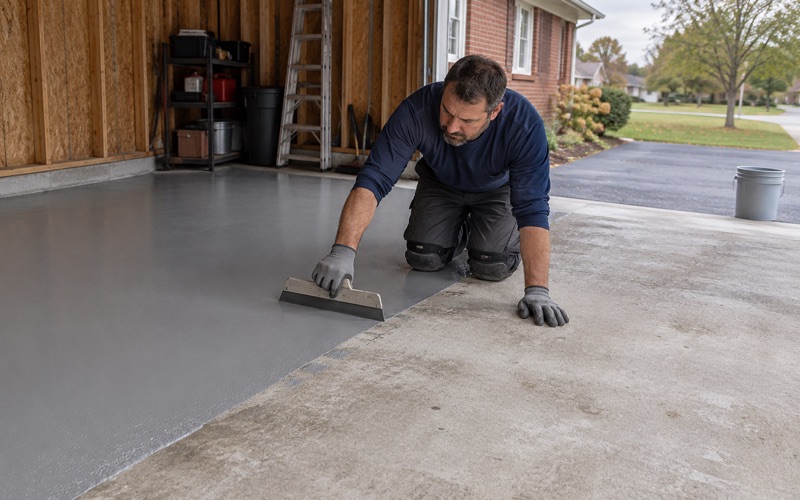
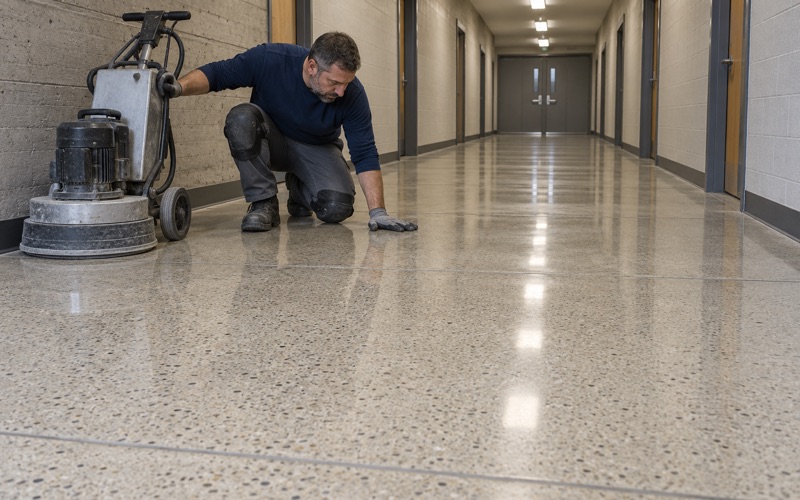
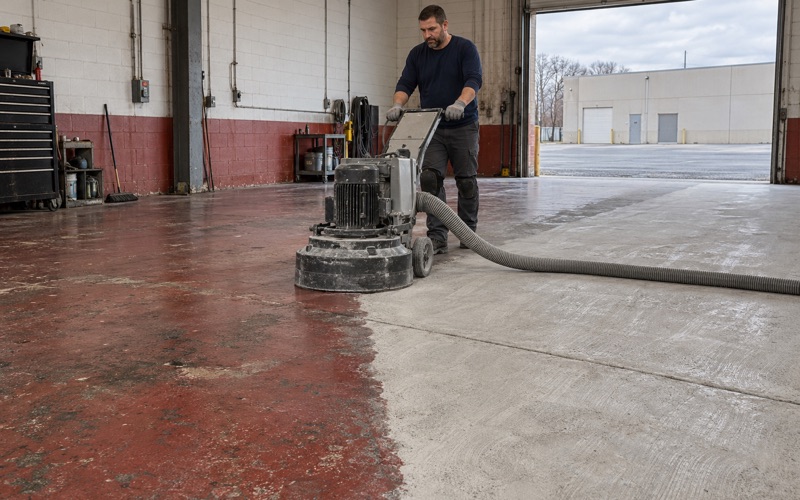
Every slab we take on is opened mechanically, with a diamond grinder or a shot blaster, because an acid etch leaves nothing dependable to grip. The written proposal then states the product line, the coat count and the finished thickness, so a facility manager can hold the finished floor up against the quote line by line.
Life-Science Shipments and the Cold They Bring to the Floor
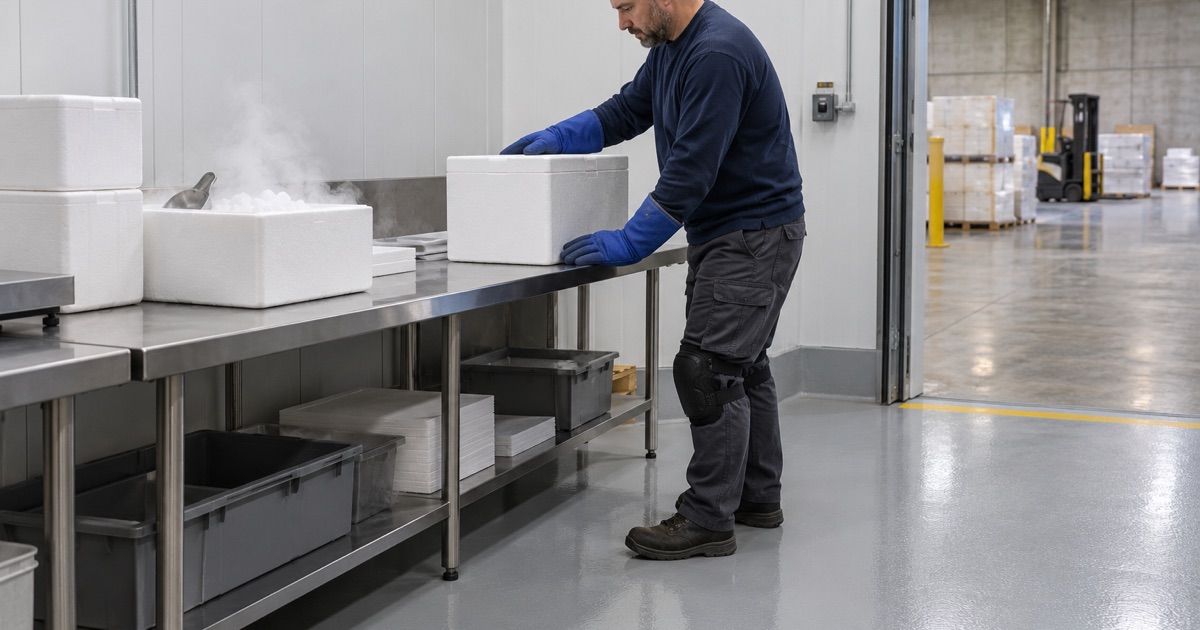
Job postings from Kuehne+Nagel place a QuickSTAT team in Schiller Park, and they describe the work in plain terms. An Air Logistics Warehouse Associate there moves time-critical consignments through the QuickSTAT warehouse and selects temperature-controlled packaging, including phase-change material, liquid nitrogen and dry ice, based on what each shipment requires. Another posting describes a specialist who handles and monitors those consignments and their cryogen solutions.
What gets packed at the bench
QuickSTAT describes itself as round-the-clock logistics for clinical trials, cell therapy and organ transport. The postings add temperature loggers, GPS trackers and quality checks on reusable temperature-controlled packaging to the daily routine. None of that is unusual for an air-logistics warehouse on the O’Hare edge of the village, but it means the packing area handles materials most warehouse floors never see.
We should be clear about what we know. Kuehne+Nagel is not a customer of ours, we have not seen the QuickSTAT floor, and the postings give no street address. What follows is how we approach any packing room that handles cryogens, using this operation as the clearest local example of the work.
How cold a spill really is
Liquid nitrogen boils at about minus 320 degrees, and dry ice sits near minus 109 degrees. A splash from a dewar or a dropped block of dry ice chills a small area of floor far faster than the slab around it can respond. The concrete below has mass and holds its temperature; the top few mils of coating do not.
A single small splash often flashes off before it does harm. The trouble is repetition. A bench where cryogens are poured every shift sees the same few square feet chilled and rewarmed again and again, and that cycling finds a weak bond line or a brittle film long before anything else in the building wears out.
Phase-change packs and dry ice fragments
Phase-change material brings a gentler problem: condensation. Packs conditioned cold and staged on the floor sweat as they warm, and that water sits on the surface until someone mops it. Dry ice also sheds fine fragments when blocks are broken or pellets are scooped, and those fragments become small cold spots wherever they land under a bench or cart.
Looking for epoxy-flooring closer to Bensenville? See Bensenville Epoxy-Flooring.
Why a Thin, Rigid Coat Fails Where Cryogens Land
Concrete and resin shrink at different rates as they cool. On an ordinary floor the difference never matters, because temperatures change slowly and the whole slab moves together. Under a cryogen spill the coating tries to shrink hard and fast while the concrete under it barely moves, and the strain lands right at the bond line between them.
Cracking and debonding at the spill edge
A thin, hard film has little room to give. It either cracks across the chilled patch or lets go at the edge where cold meets warm, and once an edge lifts, mop water and cleaning solution work their way underneath. A coating can look fine on a walk-through yet sound hollow under a tapping rod exactly where a packing bench has stood for years.
Building the system for the zone
No floor coating is rated for direct immersion in liquid nitrogen, and we will not tell anyone otherwise. What a well-chosen system can do is tolerate occasional splashes and cold drops without cracking or debonding. That usually points toward a material with more tolerance for thermal cycling in the spill zone, such as urethane cement, rather than the thinnest, hardest coat on the price sheet.
Surface preparation matters even more here than elsewhere. We open the slab to the ICRI concrete surface profile the product calls for, by grinding or shot blasting, so the bond is mechanical rather than hopeful. A coating that will be stressed at the bond line every shift needs every bit of anchor the profile can give it.
Moisture before cold
A slab pushing moisture vapor makes every one of these failures worse, because a weakened bond gives way sooner under thermal stress. Our scope includes a moisture test before the price is final, using ASTM F2170 in-situ relative humidity probes or ASTM F1869 calcium chloride testing as the slab calls for, and the results decide whether a moisture-mitigation primer goes down first.
The test also shapes the warranty conversation. Moisture is the first exclusion on nearly every coating warranty, and we name it before the job is sold rather than after a blister appears. A packing room that cannot tolerate surprises deserves to know exactly what the manufacturer will and will not stand behind.
Zoning the Packing Room Apart From the Warehouse
A whole warehouse rarely needs one floor. Most of an air-logistics building sees pallet jacks, dock plates and foot traffic, and a 100% solids epoxy with a suitable topcoat serves that well. The packing bench, the dewar fill station and the dry ice storage area carry a different load entirely, and treating them as one floor means overspending everywhere or underbuilding where it counts.
Drawing the line on the slab
We start by mapping where cryogens are actually poured, broken, staged and carried, which is often a smaller footprint than people expect. That zone, plus a margin for drips along the carry route, gets the cold-tolerant system. The transition to the general warehouse coating is detailed so the two meet cleanly, without a raised lip that catches a cart wheel or a gap that holds dirt.
Color and marking that work for the staff
Zoning can be visible as well as structural. A different color or a painted boundary tells staff where liquid nitrogen and dry ice belong, and it helps keep a cart of reusable shippers out of the splash zone. Aisle lines and staging boxes are laid out with the operations team so the floor matches how the room is really used.
Phasing work around shipments
Time-critical consignments do not wait for a floor contractor. We phase the work around shifts and dock schedules, using overnight and weekend windows when the building cannot stop, and we sequence the zones so packing can move to a finished area while the next one is ground and coated. Cure times follow slab temperature and dew point, never the calendar.
That last point bites in a cold room. A slab near a cryogen station or chilled storage can run colder than the air above it, and if the dew point spread at the surface is too narrow, condensation or amine blush forms on the fresh coat. We measure before each lift goes down and wait when the numbers say wait.
Seamless, Cleanable and Quick to Inspect
Clinical and cell-therapy shipments go out under strict handling expectations, and the floor under the packing bench is part of that environment. A seamless surface with no grout lines, open joints or cracks gives spills and dust nowhere to settle. It can be mopped dry quickly after a phase-change pack sweats, and a supervisor can see at a glance whether the area is clean.
Joints, cove and cleanup
Saw-cut joints and old cracks are mapped before we price the job, and we say plainly when a section of slab needs repair or replacement before it should be coated at all. Joints in the packing zone are filled flush so a cart or shipper rolls over them smoothly. Where walls meet the floor, a coved base keeps mop water and dry ice fragments from collecting in a square corner.
Traction without trapping dirt
A cold, wet floor is a slip risk, and condensation off conditioned packs makes it worse. A fine quartz aggregate broadcast in the topcoat adds grip while staying easy to clean, which a coarse texture is not. We set the texture with the people who mop the floor every day, because an anti-slip finish nobody can keep clean defeats its own purpose.
Village paperwork before the grinder starts
The Village of Schiller Park requires contractors to be licensed with the village before construction begins, registering through the Community Core app with scope, cost, insurance, surety bond and workers’ compensation as applicable, on a license year running May 1 to April 30. Illinois has no state flooring license, so we confirm the village’s rules before booking and ask the Community Development Department whether a coating needs a permit.
Grinding dust is captured at the machine with a vacuum rather than rinsed toward a floor drain, which matters in a building that ships sensitive consignments. Our products are selected inside the Illinois VOC limits for floor and industrial coatings, and because those limits apply to whoever applies the coating, we treat them as our responsibility rather than the building’s.
If your Schiller Park facility handles liquid nitrogen, dry ice or chilled packaging, we will walk the packing area, test the slab and lay out a zoned plan with clear thickness and cure numbers. You get an honest read on what a coating can tolerate near cryogens, and what it cannot.
- 20+ Years of Floor Work
- Moisture Test in Every Scope
- Written Proposal, Named Products