Des Plaines Epoxy Flooring has spent more than 20 years on epoxy flooring in Summit and the rest of the Cook County suburbs, and the floors we think hardest about here are the ones that get dirty in a specific way. Black, sticky residue on a garage or shop slab is not ordinary grime, and the way it gets cleaned decides whether the concrete underneath stays gray or turns permanently dark.
This page is about that problem: what happens when asphalt reaches a floor, why the usual solvent cleanup can make bare concrete look worse, and how we pair a coating with a cleanup habit so the two work together. It is written for homeowners, owner-landlords and small shop owners who are weighing a coated floor against leaving the slab as it is.
We will also explain how we read a manufacturer’s chemical-resistance chart, because the difference between a splash rating and a standing-exposure rating is where most disappointment with a coated floor starts. None of it requires a sales pitch, only a clear look at the slab and the work that happens on it.
An Asphalt Plant on the Canal, and What Follows It Home
The plant on Archer Road
Summit has a working asphalt plant inside the village. The Owens Corning Trumbull facility at 5824 S. Archer Road sits on the Chicago Sanitary and Ship Canal, and its own member profile describes receiving asphalt by barge, rail and truck from refineries across North America. Blending, modification and storage and distribution are the work it names as its cornerstones.
Asphalt brought in that way is blended, modified and air-blown into material for roofing and paving. A 1977 account described the Summit plant as one of the largest airblown asphalt operations in the country, a dated description we repeat only as history. We have no connection to the plant and have never worked on its floors; it matters here because of what the trade around it carries.
Where asphalt meets a floor
Asphalt rarely arrives on a floor by the bucket. It rides in on boot soles, on the tires of a work truck, on a tar-crusted trowel set down on the slab, or on a roll of membrane dragged across a garage. Roofers and paving crews who live nearby sometimes bring a little of the job home every evening, and the garage floor is where it lands.
Shops that store roofing tools, kettles or paving equipment collect the same residue in heavier patches. Black smears cluster near the door, around the workbench and wherever gear is set down still warm. Hot asphalt itself is a separate matter we only mention: roof asphalt is worked at roughly 330 to 445 degrees, far beyond what any floor coating is rated to hold.
How it usually gets cleaned
The common routine is to scrape up what can be lifted, then attack the rest with a hydrocarbon solvent. Mineral spirits, naphtha and xylene all soften asphalt well, which is why they end up on garage shelves. The scraping part is sound; the trouble begins with how the solvent is used, and with what it lands on.
Looking for epoxy-flooring closer to Burr Ridge? See Burr Ridge Epoxy-Flooring.
Why Solvent Cleanup Stains Bare Concrete
The slab drinks the solution
Bare concrete is porous. When a solvent dissolves an asphalt smear, it does not lift the black away so much as turn it into a thin, dark liquid, and an uncoated slab soaks that liquid in. The stain that was sitting on the surface is now carried below it, spread wider than the original spot and much harder to reach.
Scrubbing more solvent into the area tends to repeat the cycle. Each pass dissolves a little more residue and pushes it a little deeper, which is why an owner can spend an afternoon on one patch and finish with a larger gray-black shadow than they started with. Densifiers can tighten a bare surface, but they do not give it a film that solvent sits on top of.
What changes on a coated floor
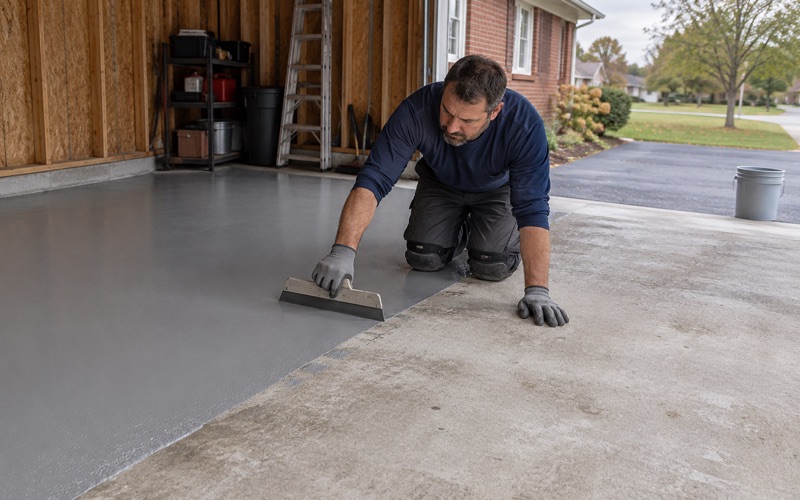
A properly bonded epoxy turns the floor into a closed film. Solvent and dissolved asphalt sit on top of it instead of wicking into the concrete, so the cleanup becomes a matter of wiping the surface rather than fighting the slab. That is the main practical reason someone in Summit with an asphalt-prone garage or shop chooses a coating.
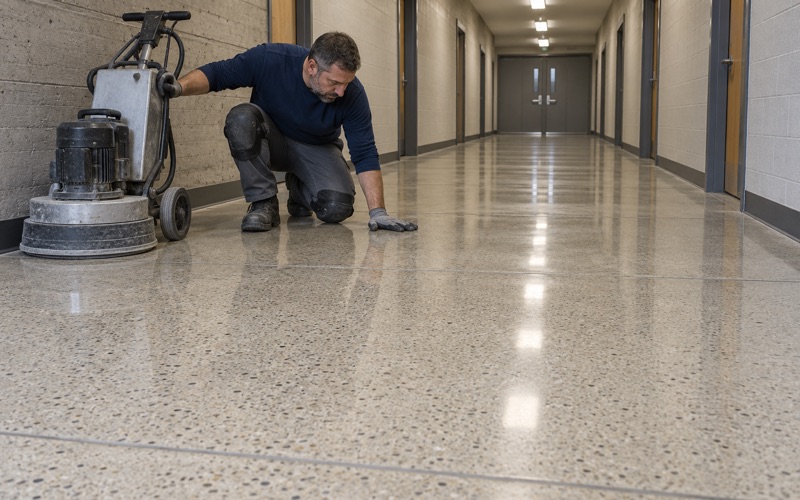
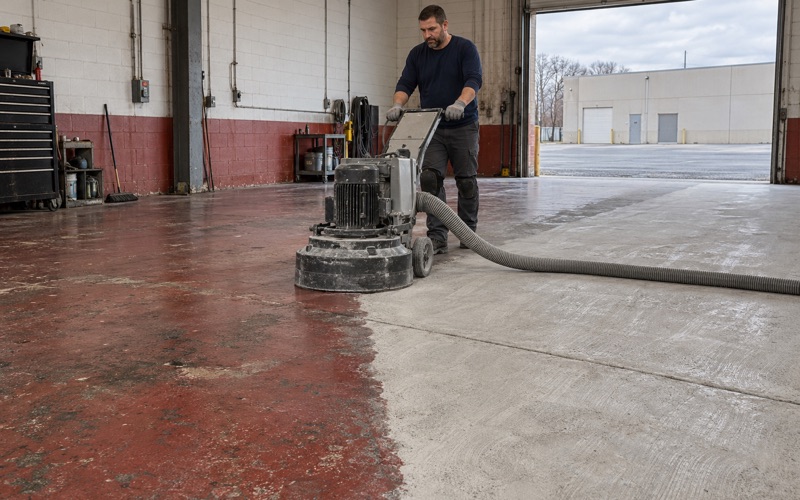
The coating is only as good as its bond, though. A film over an acid-etched or poorly prepared surface can let solvent creep under a lifted edge, and then the problem is worse than bare concrete. That is why we open every slab with a diamond grinder or a shot blaster to a measured ICRI concrete surface profile rather than relying on an etch.
Old stains under a new coating
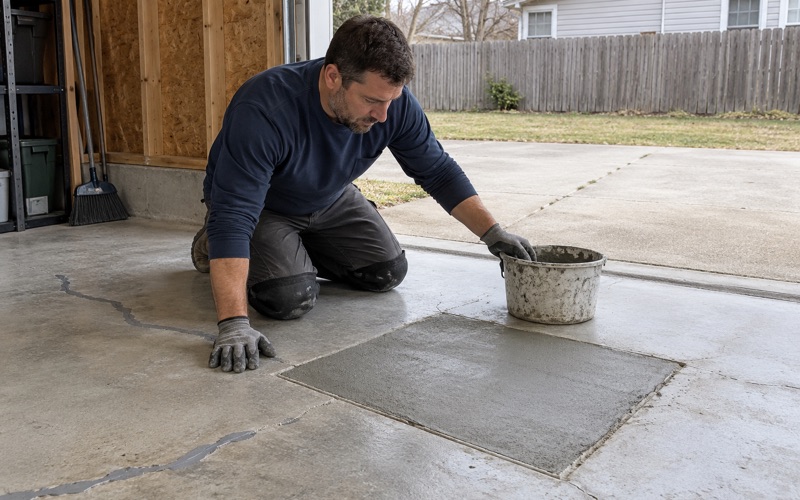
An asphalt stain already driven into a slab does not disappear when it is coated. Grinding removes the top of it, and on many floors that is enough, but deep staining can still read through a thin or light-colored system. We map the stained areas, along with any cracks, spalls and old coating, before quoting, and we say plainly when a darker color or a flake broadcast will hide what grinding cannot remove.
Reading a Chemical-Resistance Chart: Splash Versus Standing
Two columns, two different promises
Every serious floor coating comes with a chemical-resistance chart, and most of them separate short-term exposure from long-term exposure. One epoxy maker’s chart, for its TEKNOFLOOR 500F floor coating, defines short term as splashes rinsed off the same day. Long term means repeated splashes to one spot, or permanent exposure lasting up to three months.
Those two columns answer different questions. A short-term rating says the film tolerates a spill that is cleaned up promptly. A long-term rating says it tolerates a puddle, a soaked rag or a drip under a parts washer that nobody notices for weeks. Reading only the first column is how a coating gets asked to do a job its maker never claimed.
What that chart says about cleanup solvents
On that particular chart, solvent naphtha carries the top rating for both short-term and long-term exposure. Xylene carries the top rating short term but a lower one long term, with a note that it is not for surfaces under immersion. Acetone rates acceptable short term only, with a warning about color and gloss change.
The lesson is not that epoxy shrugs off every solvent. It is that one product, tested by its maker, held up well to a naphtha or xylene splash rinsed off the same day and less well to xylene left standing. Mineral spirits do not appear on that chart, so we check the sheet for the exact product we propose rather than assuming.
One chart is not every epoxy
Resistance varies by resin, curing agent and topcoat, so a rating from one manufacturer does not transfer to another product. Polyaspartic and polyurea topcoats have their own charts, and so do urethane cement systems. Our written proposal names the product line, the coat count and the finished thickness, which means the chart we cite is the chart for the floor being installed.
Choosing the Coating and the Cleanup Together
Matching the system to the solvent
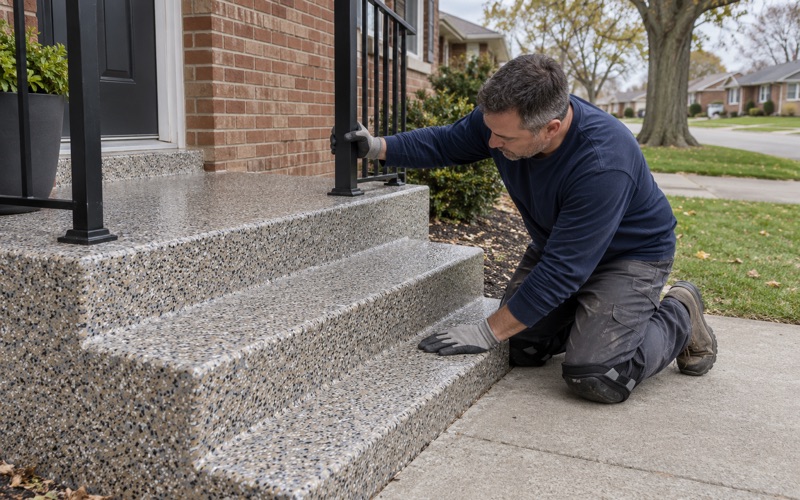
For a garage or shop where asphalt shows up regularly, we start from the solvents the owner actually uses and pick a system whose sheet rates them, with a hard, chemical-resistant topcoat over a 100% solids epoxy base. A quartz or vinyl flake broadcast adds texture and hides minor marking. Products are selected within the Illinois VOC limits for floor and industrial coatings.
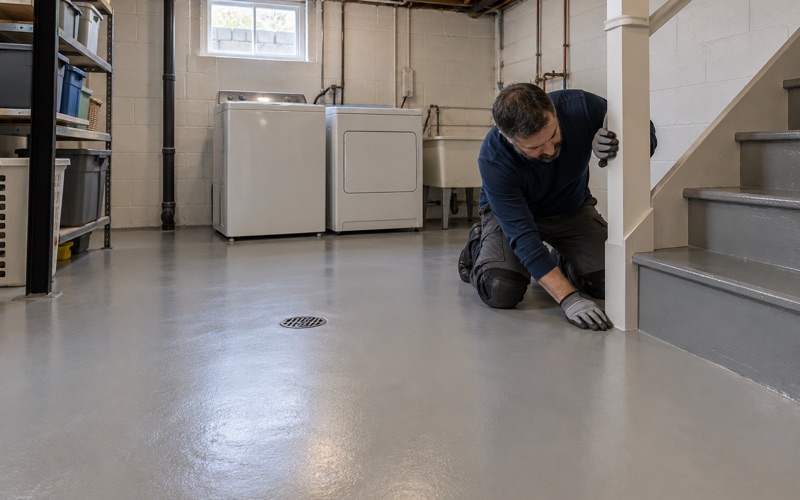
Slab condition comes before any of that. The village’s 2024 hazard mitigation annex places most of Summit in the Des Plaines River floodplain, and much of the housing stock was built before 1960, so we write a moisture test into every scope. A coating on a damp slab can lose its bond, and moisture is the first warranty exclusion we name before a job is sold.
A cleanup routine that wipes, not soaks
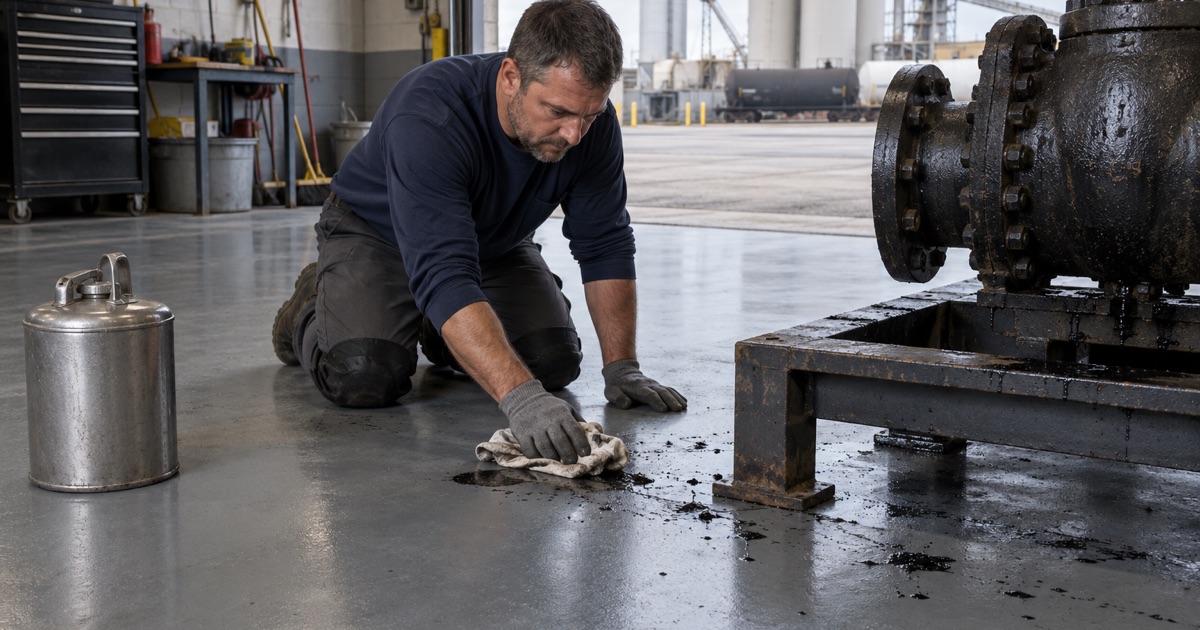
The coating does half the work; the routine does the rest. Scrape fresh asphalt with a plastic scraper while it is cool and brittle, then dampen a rag with the solvent rather than pouring it on the floor. Wipe the softened residue up, follow with clean water and a mild detergent, and dry the spot.
The goal is to keep every exposure in the short-term column of the chart. A solvent-soaked rag left on the floor overnight, a coffee can of spirits tipped over behind a workbench or a parts tray that drips onto one spot moves the floor into long-term exposure. We leave each owner with a written note listing which solvents the installed product is rated for and how long they may sit.
Scheduling and paperwork in Summit
Building questions go to the Village of Summit Building and Public Works department at the Strzelczyk Municipal Center, 7321 W 59th Street. We ask there before the job whether a coating needs a permit, and Illinois has no state flooring license, so we check the village’s own contractor registration, bond and insurance rules before booking.
Renters occupy a meaningful share of Summit’s homes, so an owner-landlord may want the work timed to a tenant turnover rather than a weekend. Cure times are set by slab temperature and the dew point spread at the surface, not the calendar, and an unheated garage in January is told to wait. Home jobs over the state threshold get a written contract and the Illinois consumer-rights pamphlet before any grinding starts.
- 20+ Years of Floor Work
- Moisture Test in Every Scope
- Written Proposal, Named Products