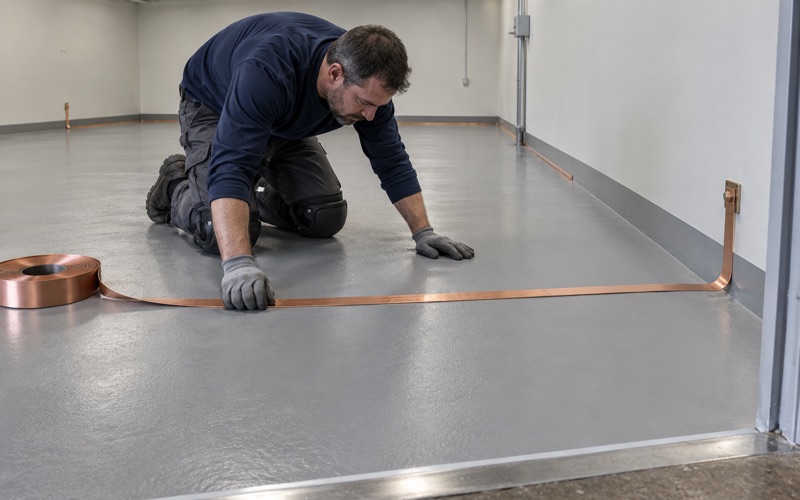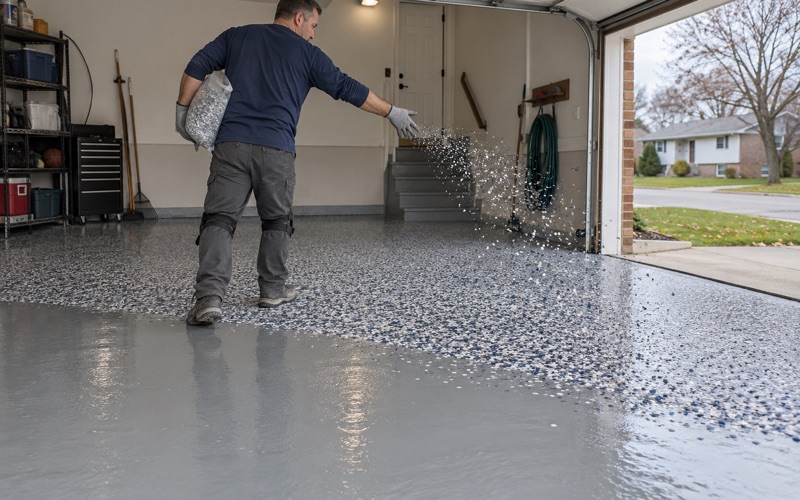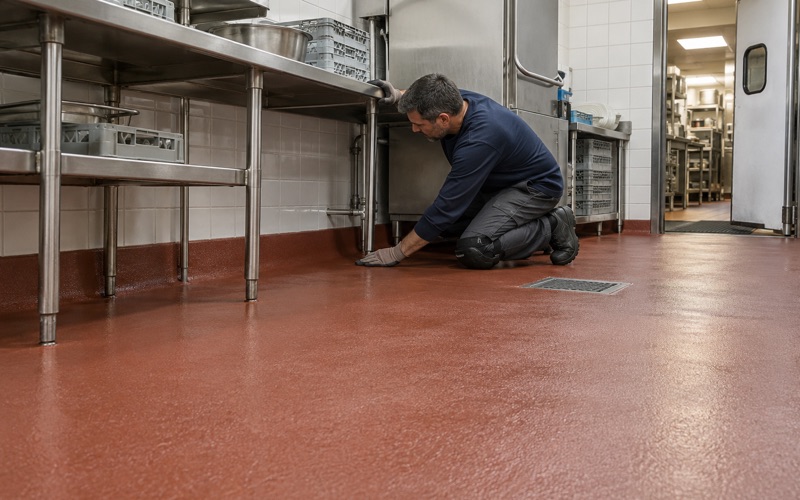
Des Plaines Epoxy Flooring has spent more than 20 years on epoxy flooring in Westchester and across the near-west suburbs, and every job here starts where the floor’s life is decided: the slab. We open the concrete with a diamond grinder or a shot blaster, test it for moisture before the price is final, and write the product line, coat count and finished thickness into the proposal so you can check the floor against the quote.
What sets some Westchester jobs apart is a single clause. On certain lots, the floor below a set elevation has to meet a federal standard for flood-resistant materials, and a resin floor happens to be one of the finishes that standard names. We think an owner should understand exactly what that clause asks for, and what it does not, before choosing a finish for a garage or a lower level.
This page walks through the clause, the FEMA bulletin behind it, how resin floors and the usual alternatives are rated, and where the rating stops. None of it replaces a conversation with the village, and we will tell you plainly when a question belongs to the Building Department rather than to us.
The Floodplain Clause on the Village’s Garage Sheet
What the sheet says
Westchester is a village in Cook County, a western suburb of Chicago with 16,892 residents at the 2020 census. Its Community Development and Building Department publishes a plain-language handout titled Code Requirements for Single Family Detached Garage, most of which covers permits, zoning and inspections. Near the end sits a short section that applies only to lots in the floodplain.
On those lots, the sheet says materials below the flood elevation must be flood-resistant, citing village code 14.20.090(3)(G)(ii) and FEMA Technical Bulletin 2. The same section asks for electrical to be elevated, vents to be installed, and compensatory storage under 14.20.060 and the Cook County Watershed Management Ordinance. The floor is one line in a longer list, but it is the line our work answers to.
Which floors it reaches
The clause does not reach every garage in the village. It applies on floodplain lots, and only to materials below the flood elevation; a garage outside the floodplain, or a surface above that elevation, is not caught by it. We have not mapped which Westchester lots fall inside the floodplain, so we do not guess for anyone, and neither should a salesperson.
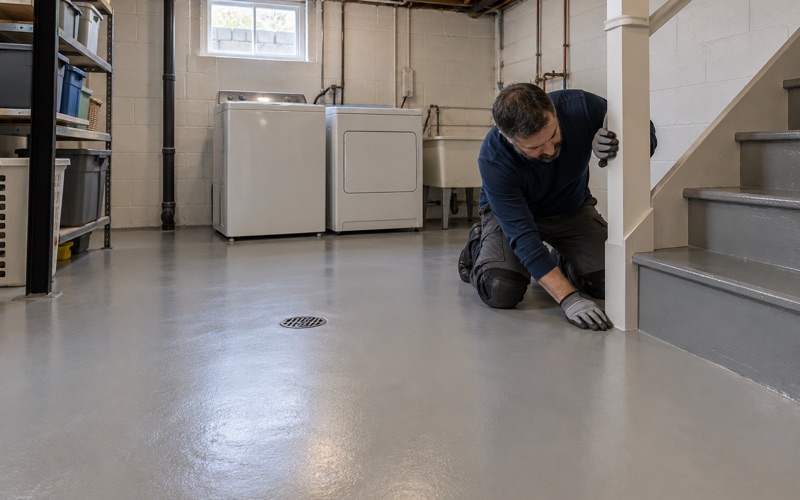
The Building Department and the village’s floodplain chapter, 14.20, are where that answer comes from. Before we quote a floor on a lot that might be affected, we ask the department whether a coating needs a permit and what it expects below the flood elevation, rather than assuming either answer. If the lot has a lower level as well as a garage, we ask about that space directly too.
Why the owner is the one deciding
Of 6,908 occupied units in Westchester, 6,275 are owner-occupied, or 90.8 percent. The person choosing a garage floor here is nearly always the person who will park on it, sweep it and deal with whatever water reaches it. That is a good reason to pick a finish on what the federal table actually says rather than on a sales line.
Looking for epoxy-flooring closer to Lake Forest? See Epoxy-Flooring in Lake Forest.
What FEMA Means by Flood Damage-Resistant
The 72-hour test
Technical Bulletin 2, Flood Damage-Resistant Materials Requirements, is the National Flood Insurance Program guide the village sheet points to. The January 2025 edition defines flood damage-resistant materials as building products capable of withstanding direct and prolonged contact with floodwater without sustaining significant damage. Prolonged contact, in the bulletin’s words, means at least 72 hours.
Significant damage is anything beyond cosmetic repair, and cosmetic repair is spelled out as cleaning, sanitizing and resurfacing. So the test is not whether a floor stays dry. It is whether, after three days under water, the floor can be brought back by washing it, disinfecting it and, where needed, putting a fresh coat on it, while anything that has to be torn out fails.
Two ratings instead of five
The 2025 edition replaced the 2008 bulletin, which sorted materials into five classes. The new version uses two ratings, acceptable and unacceptable. Building materials below the base flood elevation in a special flood hazard area must be flood damage-resistant, which in practice means they must come from the acceptable column for their use.
The simpler split is easier to read and leaves less room for argument. The bulletin organizes its ratings by where a material goes, with structural materials in Table 1 and finish materials in Table 2. Cast-in-place concrete, the slab itself, is rated acceptable in Table 1, so the question on most garage and lower-level jobs comes down to what is put on top of it.
Where Resin Floors and Common Finishes Land in Table 2
Formed-in-place epoxy and polyurethane
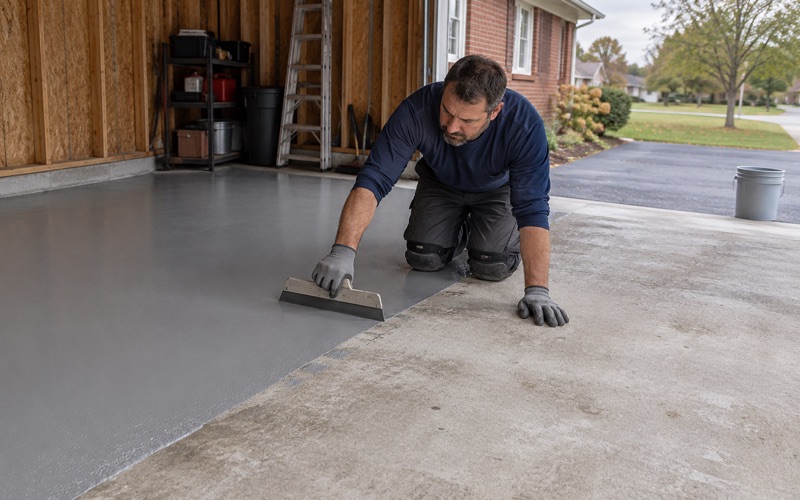
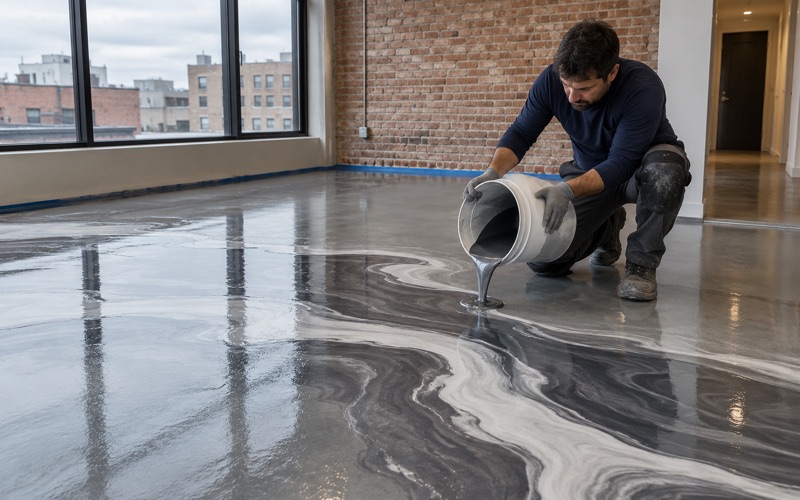
For floors, Table 2 rates epoxy flooring, formed-in-place, as acceptable. Polyurethane, formed-in-place, is acceptable, and so are formed-in-place mastic flooring and terrazzo. Formed in place is the phrase doing the work: the floor is mixed and applied on the slab as a liquid, then cures into one continuous film bonded to the concrete.
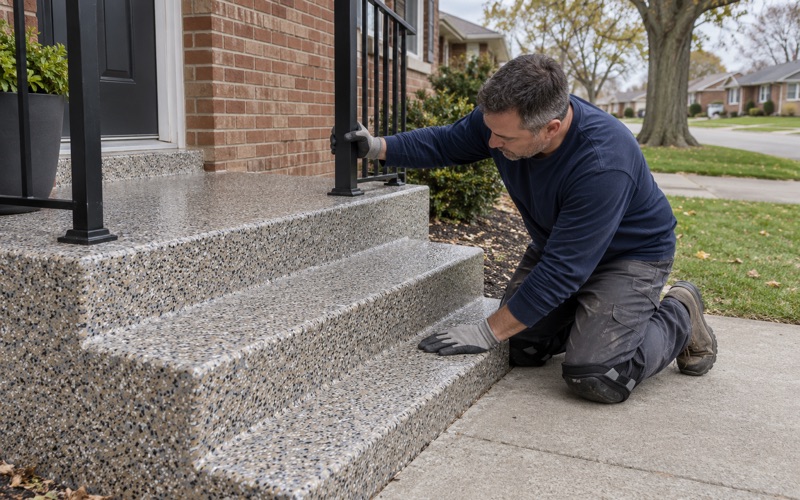
That is the kind of floor we install. A 100% solids epoxy base, with a vinyl flake or quartz aggregate broadcast for texture, under a polyurethane topcoat goes down as one bonded system on concrete. Where an owner wants a topcoat chemistry the table does not name, such as a polyaspartic, we say that it is not on the list rather than implying a rating it was never given.
The finishes rated unacceptable
The same table rates carpeting unacceptable. Linoleum is unacceptable, and so are wood floor coverings, including engineered wood and plastic laminate. These are the materials that make a lower level feel finished, and they are also the ones that soak up water, swell or come apart once floodwater has sat on them for a few days.
Vinyl sheets or tiles are acceptable only with chemical-set adhesives. Ceramic and porcelain tile is acceptable when set in mortar but unacceptable with organic adhesives, so the same tile lands on either side depending on what holds it down. A tile bid that does not name its setting method does not tell you which column it falls in, and that is worth asking before comparing it with a resin floor.
Combinations can lower a rating
Section 5.3 of the bulletin warns that combining materials can lower a rating. Its example is vinyl tile that is acceptable over concrete but not acceptable over plywood. The same logic applies to resin: a coating bonded straight to a concrete slab is a different assembly from one laid over sleepers or a wood subfloor, so we keep a floodplain floor on the concrete.
What the Rating Does Not Promise, and How We Choose
A rating describes a material, not a job
Technical Bulletin 2 rates material types. It does not certify any product and it does not approve any installer, and we hold no FEMA approval and never describe our floors that way. The rating says what formed-in-place epoxy can survive; whether a particular floor survives depends on its bond, and the bond depends on preparation.
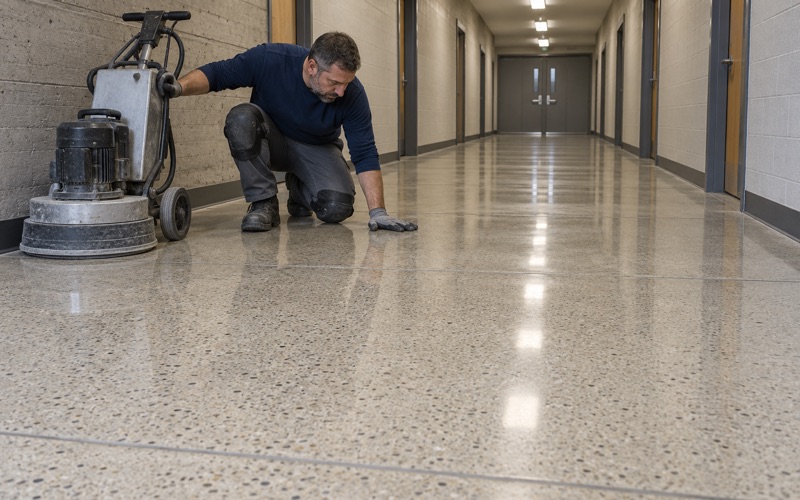
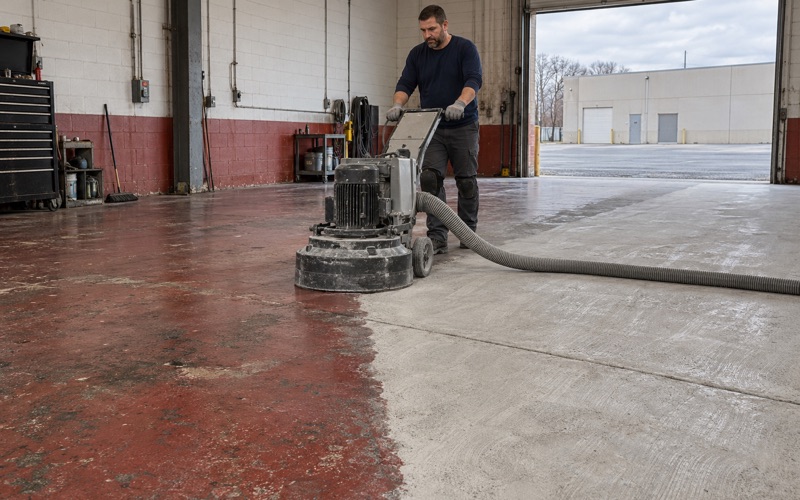
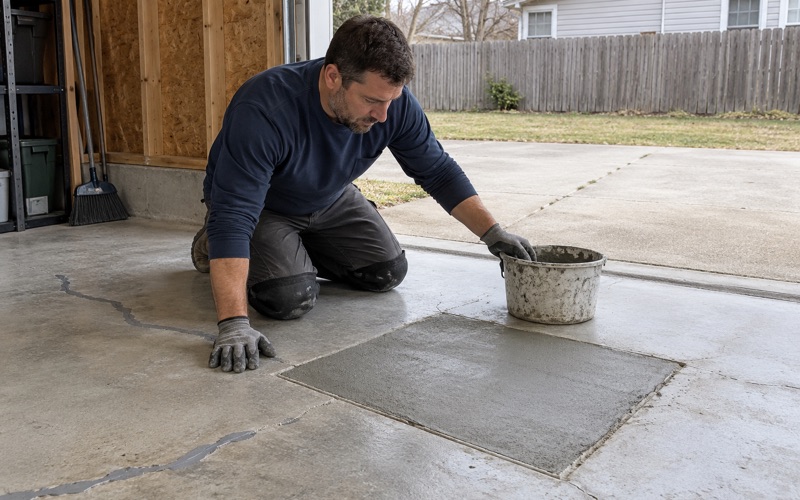
That is why we open every slab mechanically instead of relying on an acid etch, working to an ICRI concrete surface profile the primer can grip. Moisture is measured with ASTM F2170 in-situ relative humidity probes or ASTM F1869 calcium chloride testing before the price is set. We map cracks, spalls and old coatings first, and if a slab needs repair or replacement before it should be coated, we tell you.
It does not keep water out
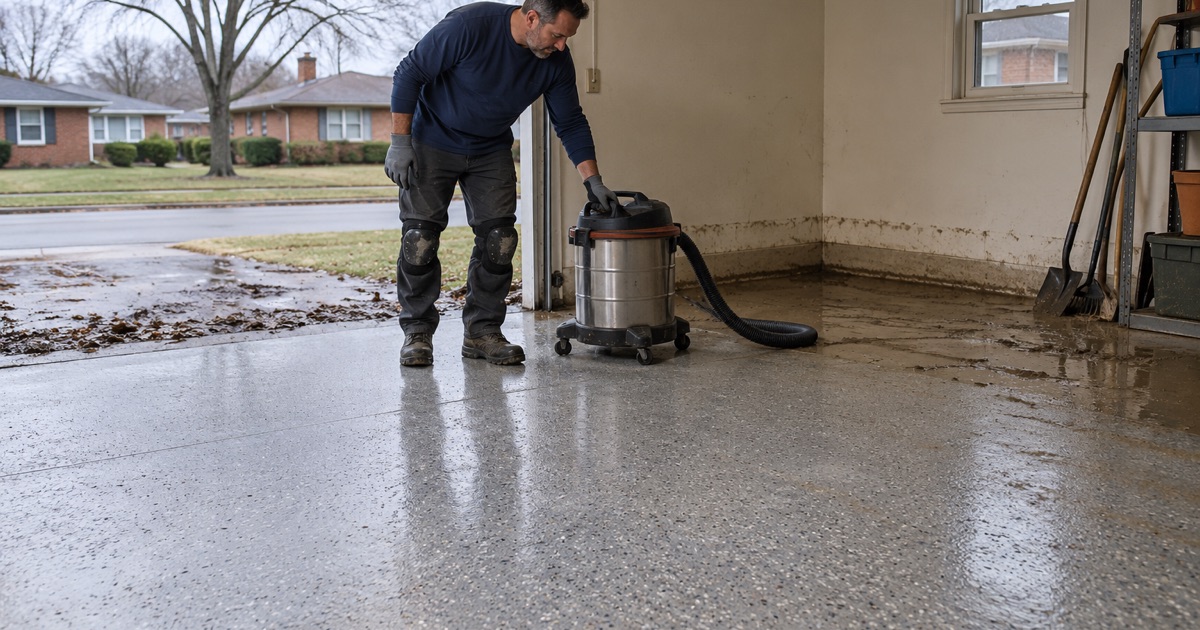
An acceptable rating is not flood-proofing. A resin floor will not stop water coming under a garage door or up through a floor drain, and we never sell one as waterproofing or flood protection. What the rating speaks to is recovery: a floor that can be cleaned, sanitized and, if needed, resurfaced once floodwater has come and gone.
Where a garage or lower level has already taken river or sewer water, we deal with the drain, the valve and the drying before a coating is discussed. A coating on a wet slab fails from underneath, which is why moisture is the first exclusion we name when we explain what a warranty does and does not cover, before the job is sold rather than after.
Insurance is a separate question
Section 4 of the bulletin adds one more limit. National Flood Insurance Program coverage will not pay a claim for finish materials located in basements, even when those materials are considered flood damage-resistant. Choosing an acceptable floor may mean less to tear out after a flood, but it does not turn the floor into an insured item.
Paperwork and timing before grinding starts
Illinois has no state license for floor coating work, so we check the village’s own contractor registration, bond and insurance rules before booking a job here. Home jobs over the state threshold get a written contract and the Home Repair: Know Your Consumer Rights pamphlet before any grinding begins, and the products we specify sit inside the Illinois VOC limits for floor coatings.
Cure is set by slab temperature and the dew point spread at the surface, not by the calendar, so an unheated garage in January is told to wait. On a detached garage we stage the work so the driveway and the neighbors stay clear, and grinding dust is vacuumed at the machine rather than rinsed toward a drain, which matters on any lot where water already has somewhere to go.
If your Westchester lot may sit in the floodplain, bring us the question early. We will help you sort what the village expects from what a resin floor can honestly offer, and put the answer in writing before anything is scheduled.
- 20+ Years of Floor Work
- Moisture Test in Every Scope
- Written Proposal, Named Products