Des Plaines Epoxy Flooring has spent more than 20 years on epoxy flooring in Western Springs and the surrounding suburbs, coating garage, basement and commercial slabs, and the hardest of those floors are the ones that get wet with something other than water. A kitchen slab that has absorbed cooking fat looks sound, cleans up passably and then rejects a coating that would have held almost anywhere else.
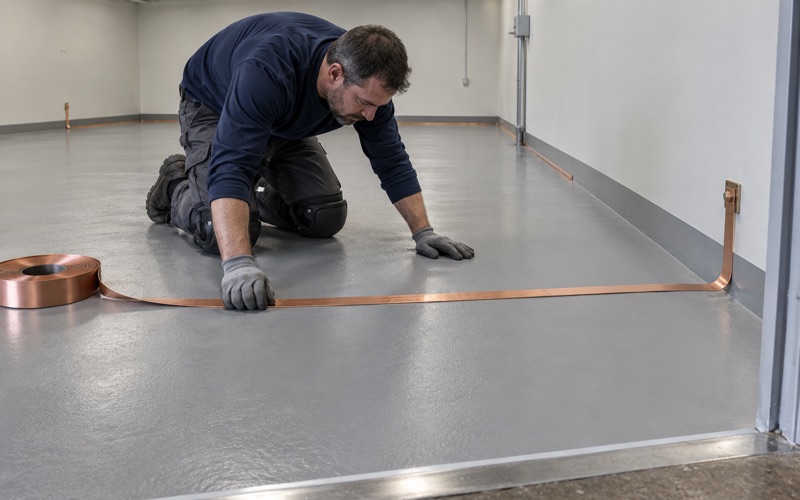
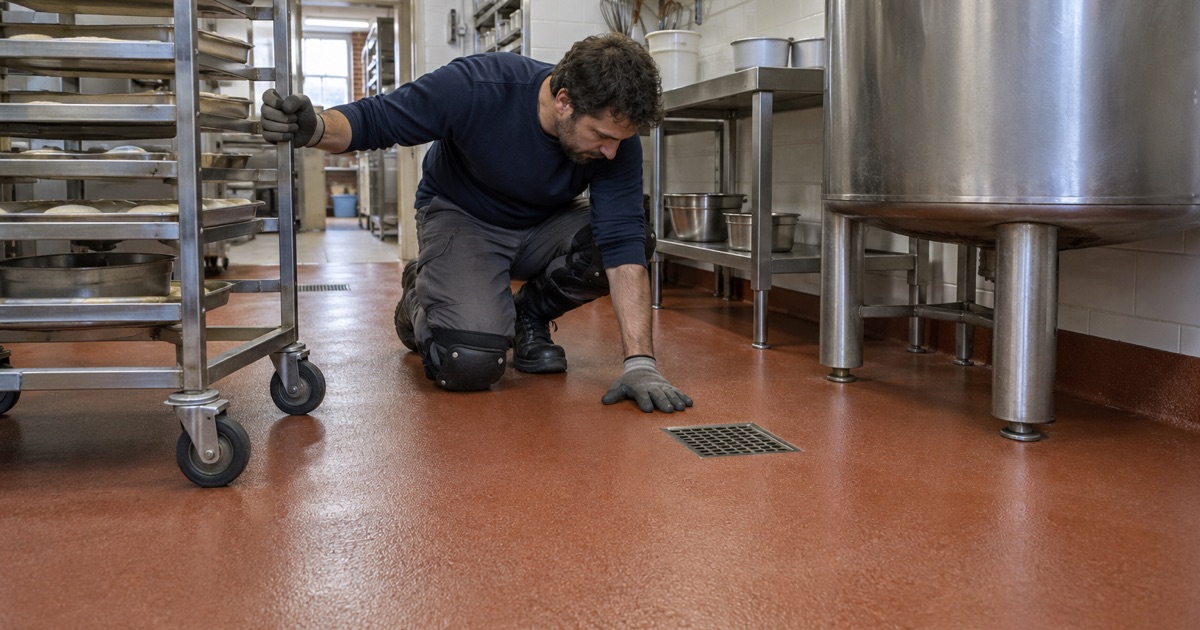
Our approach starts with the concrete rather than the product. We open every surface mechanically with a diamond grinder or a shot blaster and never lean on an acid etch, and a moisture test is written into the scope before the price is settled. On a food floor, a contaminated zone also gets a bond test, because fat hides where a visual inspection cannot reach.
Before any of that, we map the cracks, spalls and old coating on the slab and say plainly when a floor needs repair or replacement before it should be coated at all. That honesty matters most on floors with a long working history, and few floors in the village have a longer one than a production kitchen that has fried the same products for generations.
A 1930 Bakery Building on Burlington Avenue
Built for baking and still baking
Western Springs has a working production bakery in a building that was put up for baking. The Western Springs Historical Society records that Hentges Bakery, which opened on Burlington in 1925, moved in 1930 into a new $25,000 two-story building described as modern in all respects, with two new ovens, an electric cake-mixing machine and a five-room residence upstairs.
Lester and Cecilia Kirschbaum bought the business in 1954, and the family has carried it since, from son Bob and Charlene to grandson Mike and Penny, who manages the bakery. Kirschbaum’s Bakery at 825 Burlington Avenue is known for its chocolate-covered donuts and for paczki in all the main flavors. The historical society describes a mornings-only shop that closes Sundays and Mondays and takes no credit cards.
We raise Kirschbaum’s not because we have worked on its floor, which we have not seen, but because it shows a kind of building the village still has. It is a kitchen that has done the same work in the same purpose-built rooms for most of a century. That continuity is exactly what makes a food-production slab harder to coat than the floor of a shop that opened last year.
Donuts and paczki come out of a fryer
Donuts and paczki are fried, and a fryer is a floor problem of its own. Oil splashes when dough goes in, drips from baskets as they lift and runs off racks and screens on the way to glazing. None of that is a spill anyone notices on a given morning, but a fryer station that drips daily for decades puts fat into the same few square yards of concrete again and again.
Paczki make the point sharper. A shop that fries for several pickup days in a row runs its fryers harder than usual, and the floor beside them takes more of the load. Whatever bakery or restaurant owns the slab, the area around a fryer is the part of the floor we assess first, and we price it as its own piece of work rather than folding it into the rest of the room.
Looking for epoxy-flooring closer to Hinsdale? See Hinsdale Epoxy-Flooring.
Fat in Concrete: A Weaker Paste and a Coating That Will Not Stick
What the lime in cement does to oil
Concrete is not inert to cooking fat. Portland cement paste carries lime, and when fats and oils sit against it, the reaction produces fatty acids and alcohols that break down the hardened paste. Researchers at RUDN University put it plainly in a 2022 paper in Construction and Building Materials: calcium oxide acting on fats and oils forms compounds that destroy cement stone and concrete.
The numbers in that study are striking. Concrete samples immersed in vegetable oil at room temperature lost an average of 61.2 percent of their strength after 60 days and began to break apart on their own after 90. That was full immersion in a laboratory, far harsher than any drip under a fryer, and we never present it as a prediction for a real floor.
Why a drip zone still matters
A drip is not immersion, but it is also not a one-time event. The same patch of slab beside a fryer can see oil every working day for years, and each contact gives the paste another small dose of that reaction. What we look for on an older food floor is darkened, softened concrete around the equipment that scrapes away under a blade while the rest of the room stays hard.
That softened layer is not something a coating can fix by covering it. A resin bonded to weak paste is only as strong as the paste, and when the concrete under it gives way, the coating comes up with it. So the first question in a fryer zone is not which product to use, but how much of the top of the slab is still sound enough to hold anything.
Soaked-in fat and bond failure
The bigger issue for a coating is adhesion. Oil that has wicked into the pores sits below the surface where routine cleaning cannot reach it, and a coating laid over it bonds to the fat rather than the concrete. The floor may look perfect for a while and then lift in sheets near the fryer, which is why we never coat straight over a contaminated zone.
Warm floors can make this worse. As a slab heats up, oil held in its pores can migrate back toward the surface, so a patch that looked clean on a cool morning may weep after the ovens have run for hours. When we explain what a coating warranty excludes, moisture is the first item we name, and on a food floor the condition of the fryer zone sits right beside it in that conversation.
Degrease, Test, Then Seal Against Fat
Pulling the oil out before profiling
Grinding alone does not cure an oil-soaked slab; done too early, it can smear fat across freshly opened concrete. Our sequence starts with repeated degreasing, using an alkaline cleaner, hot water and machine scrubbing, with the dirty rinse picked up rather than pushed toward a drain. Where oil has gone deep, we remove the softened layer entirely, because a coating can only be as sound as the concrete beneath it.
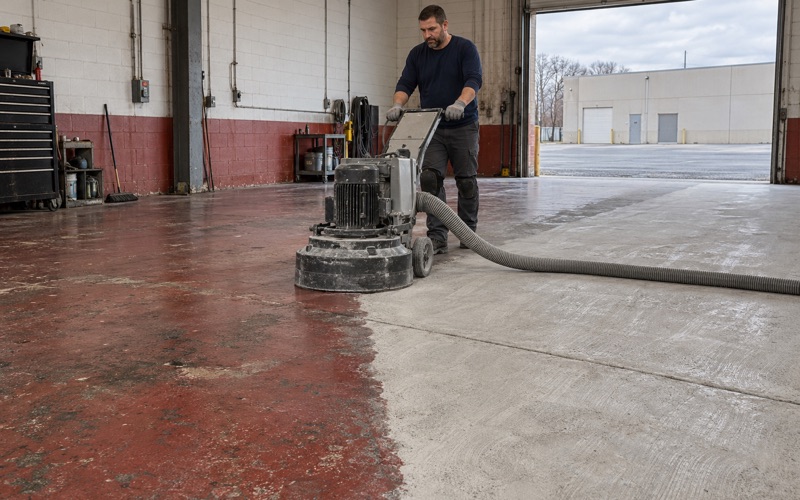
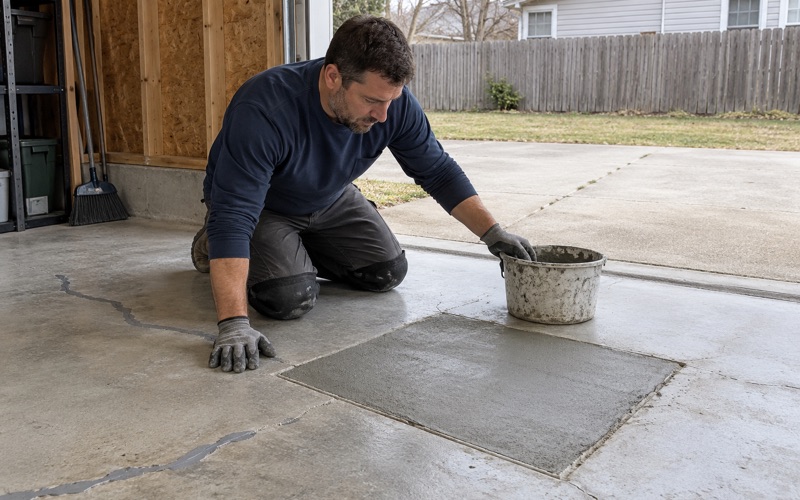
Once the slab stops giving up oil, we open it with a diamond grinder or shot blaster to a profile on the ICRI CSP scale that suits the system going down. Spalled and softened spots are cut back to sound concrete and rebuilt. Grinding dust is vacuumed at the machine, which matters in a building where food is made a few feet away from the work.
Bond and moisture tests before the full coat
Before committing the whole area, we coat test patches in the worst spots and pull them after they cure. A patch that releases cleanly tells us the slab still carries contamination; one that tears concrete away when it fails tells us the bond is stronger than the surface. Only the second result earns the full coat, and the owner hears what we found either way.
Moisture gets the same discipline. An ASTM D4263 plastic sheet test gives a quick read, and where the result matters we follow it with ASTM F1869 calcium chloride testing or ASTM F2170 in-situ relative humidity probes. Kitchen floors are washed down constantly, and a coating sealed over a slab that is both damp and oily is failing for two reasons at once.
A coating picked to resist hot fats and oils
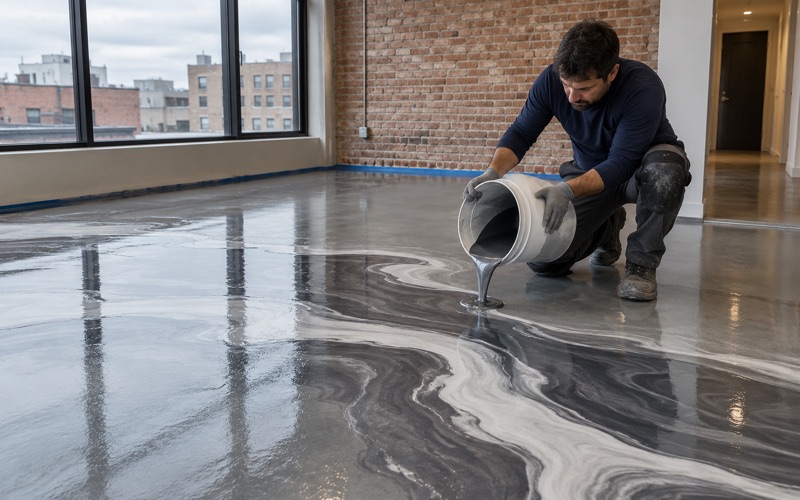
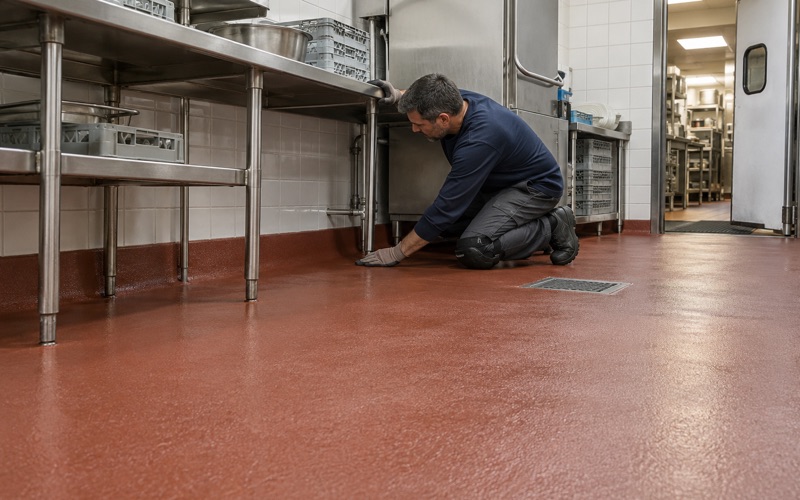
The finish around a fryer is chosen for chemical resistance first and appearance second. Urethane cement is a common answer in commercial kitchens because it tolerates hot oils, animal fats, thermal shock from hot-water washdowns and the steady moisture of a working room. Where an owner prefers epoxy, we look at 100% solids systems rated for those exposures and use them only where heat and fat stay within their limits.
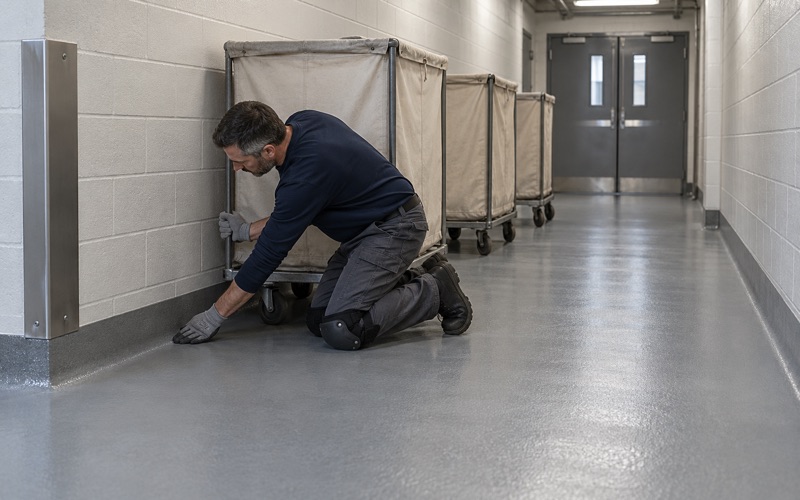
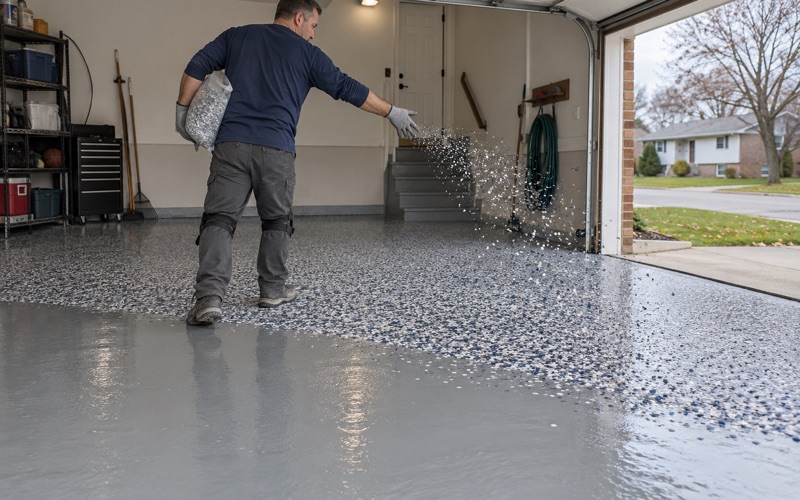
An oily floor is also a slippery one, so traction belongs in the same decision. A quartz aggregate broadcast locked into the body coat gives footing that keeps working under a film of grease, and the topcoat is built to a thickness that lets that texture survive daily scrubbing. The goal is a fryer zone that sheds fat, cleans easily and does not let the next decade of drips back into the concrete.
Three Weeks in July
A cure window set by the bakery’s own calendar
The other constraint in a working bakery is time. The historical society describes Kirschbaum’s closing for three weeks each July for a family vacation, and that kind of planned shutdown is what a fryer-zone job really needs. We would not assume any current schedule from that description, but it shows how a production kitchen tends to find its window: once a year, on its own terms.
Three weeks is generous for a coating but tight for the whole sequence. Degreasing may take several rounds spread over days, test patches need time to cure before they are pulled, and rebuilt concrete has to harden before anything goes over it. We build the schedule backward from reopening day, so the final coat has its full cure before racks and fryers roll back into place.
Cure by slab conditions, not the date
A July window brings heat and humidity, and we set cure times by slab temperature and dew point rather than by the calendar. A coating laid when the surface sits too close to the dew point can develop amine blush or lose adhesion, so we measure that spread at the slab before each coat. In a shuttered kitchen with no cooling running, the reading can shift between morning and afternoon.
Shops that cannot close for weeks get a phased plan instead. We can isolate the fryer area for overnight or weekend work, coat it in stages and return each section to service as it cures, keeping the rest of the kitchen running around shifts and deliveries. It takes more trips, but the ovens keep going while the worst part of the floor is rebuilt.
Village paperwork before the grinder starts
Work here runs through the Village of Western Springs Community Development office at 708-246-1800. Before a job is booked, we ask that office whether the coating needs a permit rather than assuming either answer. Illinois has no state flooring license, and the village’s own permit guides call for registered contractors, so we confirm registration, bond and insurance requirements first.
Products are selected inside the Illinois VOC limits for floor and industrial coatings, which apply to us as the applicator, and that matters in an enclosed kitchen with living or office space above it. Every written proposal names the product line, the number of coats and the finished thickness, so an owner reopening in August can check the floor against exactly what was promised before the vacation began.
- 20+ Years of Floor Work
- Moisture Test in Every Scope
- Written Proposal, Named Products