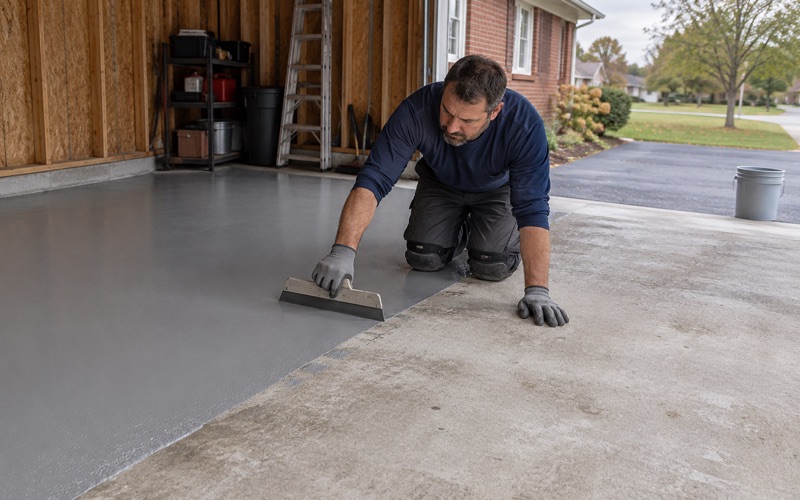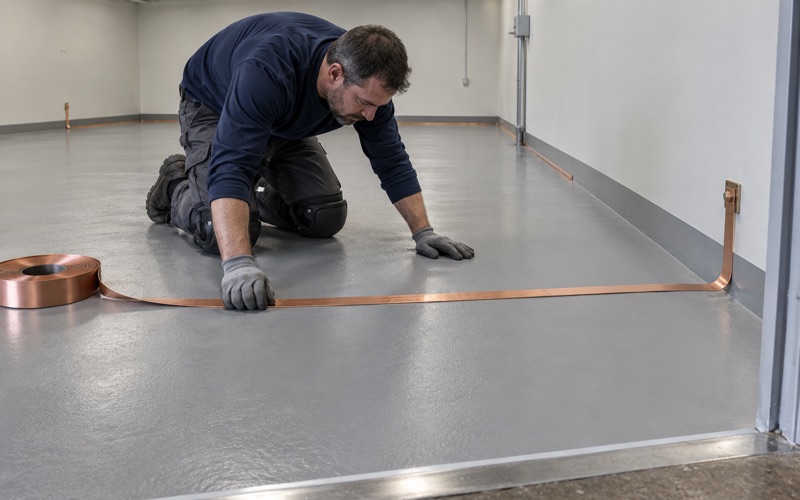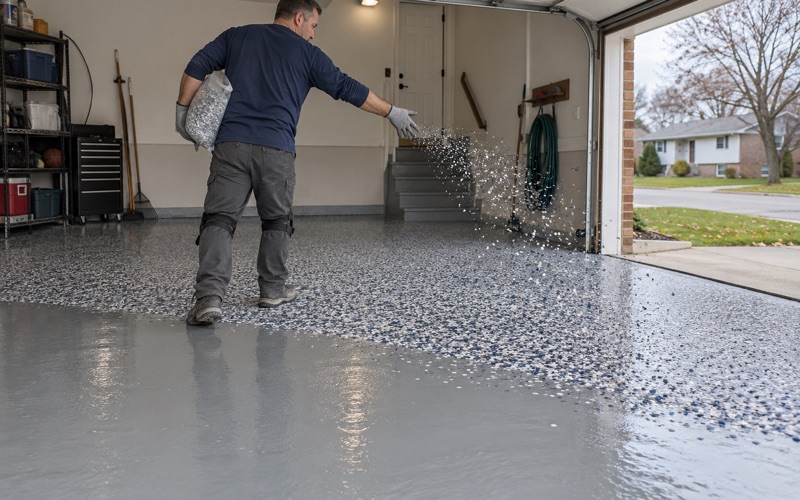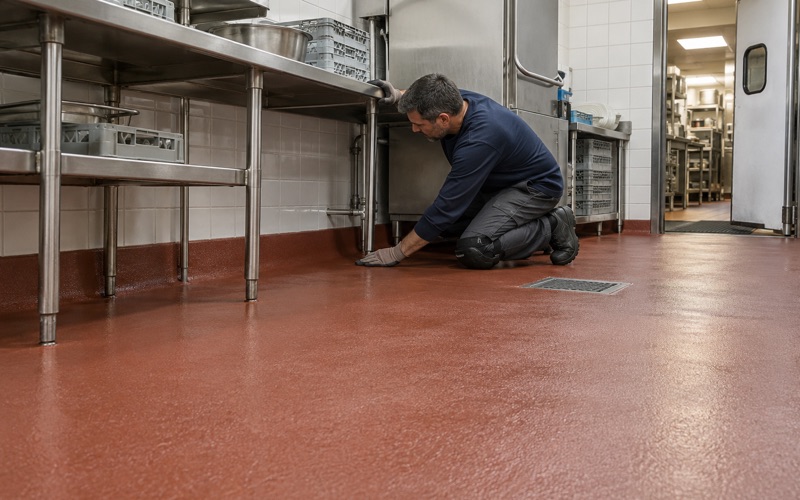
Des Plaines Epoxy Flooring brings more than 20 years of epoxy-flooring work to Winnetka, and the jobs we think hardest about here are rooms where small children spend the day. A classroom floor is judged by a different test than a showroom floor. It has to be cleaned and disinfected over and over, it has to stay dry underneath, and it cannot open a seam that holds water or grime.
That test shapes how we bid. Before a number is final, we write a moisture test into the scope, and we walk the slab to map cracks, spalls and any old coating left from a previous use. If the concrete needs repair or replacement before it should be coated, we say so in writing rather than hiding the problem under a fresh layer.
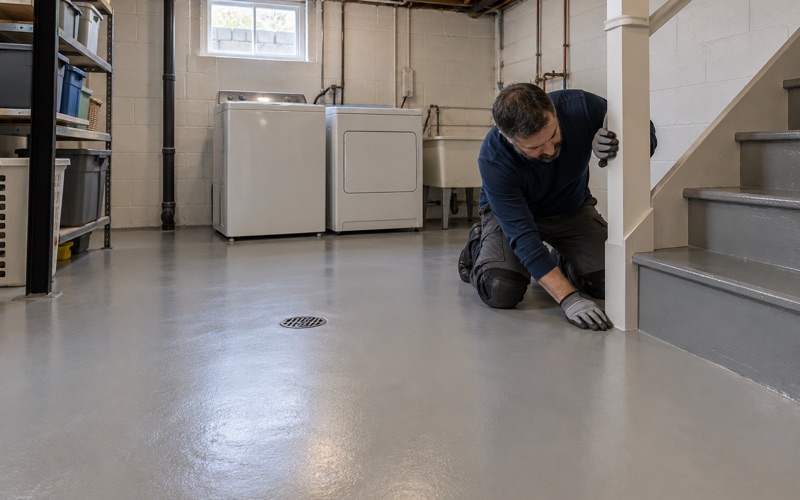
The same discipline applies to a Winnetka garage or basement. Our proposal names the product line, the number of coats and the finished thickness, so an owner, a facilities manager or a board can hold the finished floor up against the quote. What follows covers the building that shaped this page and the state standard that sits behind it.
A Preschool Inside a Public School Since 1927
How Winnetka Public School Nursery came to Skokie School
Winnetka Public School Nursery was conceived in 1926 by Carleton W. Washburne and Rose Alschuler as a preschool housed within a public school, and it opened in 1927 inside Skokie School. After a period in another building for enrollment reasons, it has been back in Skokie School since 1991. Its classrooms sit at 1155 Oak Street, inside the village, in New Trier Township, Cook County.
Today the nursery runs programs for Younger Two’s, Older Two’s, Three’s and Junior Kindergarten. We mention it because it is a clear local example of a pattern that changes flooring decisions: early-childhood rooms living inside a building first laid out for older students. We have not worked on the nursery, and nothing on this page describes the condition of its floors.
From the industrial-arts wing to classrooms
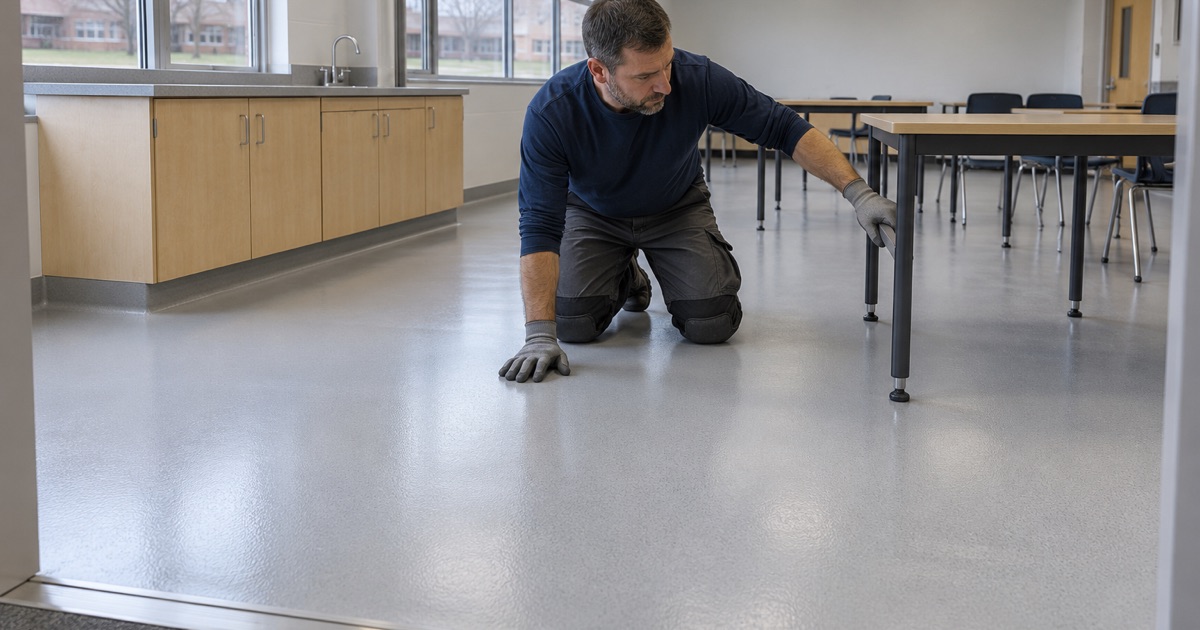
The nursery’s space at Skokie School is the former industrial arts wing. A shop room and a preschool room ask very different things of the concrete under them. A shop floor is built to take dropped tools, machine stands and spills, while a classroom floor is where two-year-olds sit, crawl and eat a snack within arm’s reach of the surface.
When any shop, workroom or storage space is converted for young children, we treat the existing slab as unknown until it is tested. Old sealers, paint, adhesive residue and patching can all sit on a former work floor. We map each of them, then decide whether grinding to a clean profile is enough or whether repair has to come first.
What the conversion asks of the floor
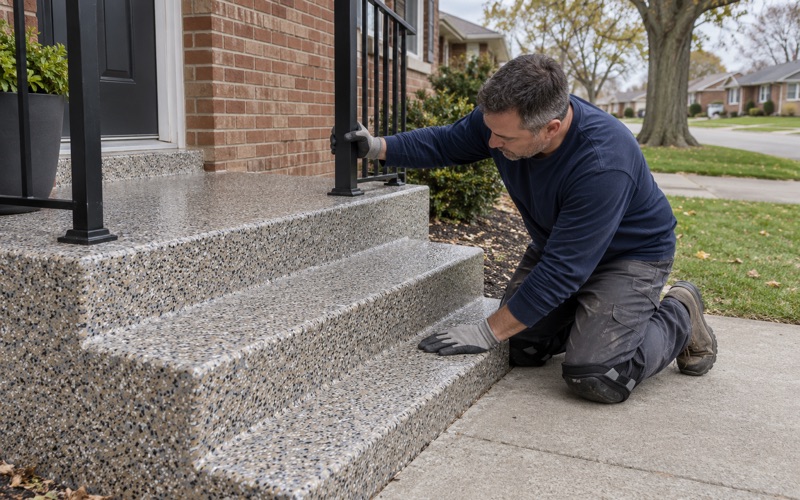
A converted room has to become easy to wash, comfortable underfoot and dry. Those three demands pull in different directions. A thick vinyl flake broadcast system is tough but can hold more grime in its texture than a smooth finish, and a slick finish mops easily but can turn slippery when wet. We pick the texture with the room’s real daily use in mind.
Looking for epoxy-flooring closer to Bellwood? See Bellwood Epoxy-Flooring.
Washable and Free From Dampness: The State’s Floor Sentence
What 89 Ill. Adm. Code 407.370 actually says
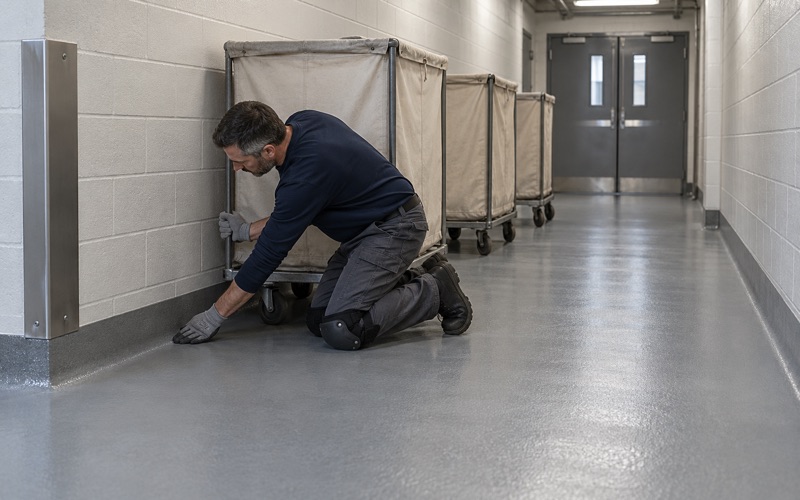
Illinois day care center standards, in 89 Ill. Adm. Code 407.370, say the floors and floor coverings shall be washable and free from drafts, splinters, and dampness. The same section asks that surfaces used by children be washed and disinfected when soiled or contaminated with matter such as food, body secretions or excrement. It also says openings to a basement or cellar shall not permit the entry of rodents.
Notice what the rule does not say. It names no coating, and it does not require epoxy or any other resin. A sealed concrete floor, sheet goods or a resin system can each be a route to a washable surface, and we would rather walk through the tradeoffs with a client than sell epoxy as if it were a compliance product.
Why washable is a coating question
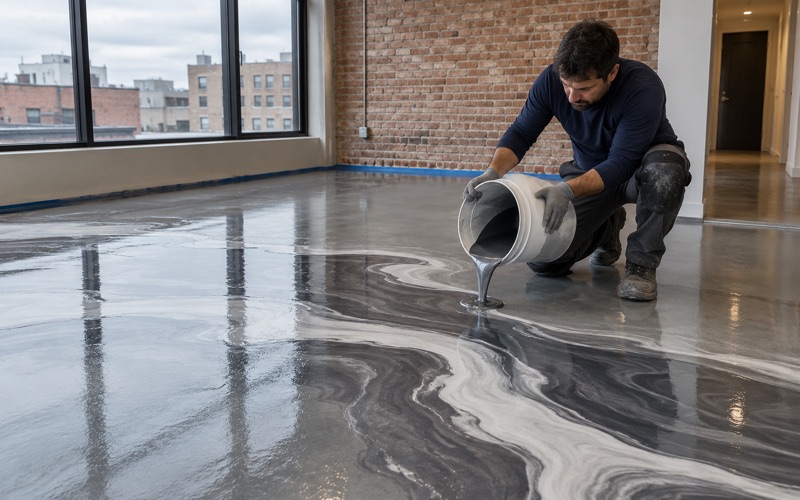
Disinfecting a floor several times a day is hard on finishes. A seamless 100% solids epoxy base with a polyaspartic or urethane topcoat gives cleaners nothing to soak into, while bare concrete is porous and can hold what is spilled on it. Where a room will be wiped down after every meal, we choose a topcoat rated to stand up to repeated chemical cleaning.
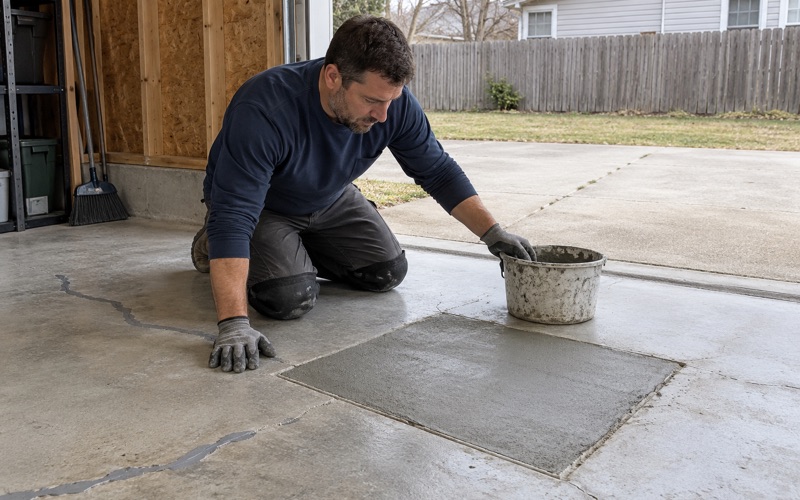
Seams and edges matter as much as the open field of the floor. Where the floor meets the wall, a coved base carries the coating up a few inches so a mop does not push water into a joint. Cracks get filled before coating so they do not return as lines that trap grime. These details are where a washable floor is won or lost.
Drafts, splinters and dampness
Splinters are mostly a wood-floor concern, and drafts belong to the building envelope, so neither is something a coating fixes on its own. Dampness is different. It is the one word in that sentence a floor contractor can actually measure, and it is the one most likely to undo a coating that looked perfect on the day it was installed.
Testing a Slab for Moisture Before Children Sit on It
Why moisture comes first
Concrete poured on grade can move water vapor up through the slab, and an older floor may have no under-slab vapor retarder of the kind ASTM E1745 describes. When vapor pushes against a dense coating, the result can be blisters, white efflorescence at the edges or a coating that lets go in sheets. In a classroom, a lifted coating is also a cleaning and tripping problem.
That is why moisture is the first exclusion we name when we explain a coating warranty, and why we explain it before the job is sold. A homeowner or facility manager should know up front that failures traced to slab moisture are commonly excluded from coating warranties, and what the test results mean for their particular floor.
The tests we run
We start with ASTM D4263, a plastic sheet taped to the slab, as a quick screen. Then we measure: ASTM F1869 calcium chloride kits report a moisture vapor emission rate, and ASTM F2170 in-situ probes read relative humidity inside the concrete. Results are compared against the coating maker’s limits and against the thresholds referenced in ASTM F710 for floors that will be finished.
Where readings run high, a moisture-mitigation primer can let a coating go down over a slab that would otherwise reject it. Where readings are far out of range, or a below-grade room takes water, we say plainly that a coating is not the fix. We never sell a floor coating as waterproofing, and the drain, the valve and the drying come first.
Cure, temperature and dew point
A coating also needs the right air and slab conditions to cure. We set cure times by slab temperature and the dew point spread at the slab surface, not by a date on the calendar. Coating too close to the dew point invites amine blush, a greasy film on epoxy that weakens the bond of the next coat and can leave a cloudy finish.
For a room that children will return to, we also plan the reoccupancy gap honestly. Fast-curing polyaspartic topcoats can shorten it, but the right answer depends on the product line named in the proposal and the conditions measured that day. We give the owner a written return-to-use time based on those readings rather than a hopeful guess.
Water Play, Paint Tables and Working Around a Shared Building
Where carpet belongs and where it does not
The same state section balances washability against noise. Multi-group rooms need an acoustical ceiling or its equivalent in carpeting or wall covering, and carpet is not required in water play, painting and similar areas. That gives a converted classroom a natural map: soft surfaces where children gather and listen, and a hard, washable floor where water, paint and food land.
For the hard zones, we think about the transition as carefully as the coating. A flush edge between a coated floor and a carpeted area keeps small feet from catching and keeps a mop from pushing water under the carpet. A light quartz aggregate broadcast in the topcoat can add grip where water play splashes without creating a surface that is hard to wipe clean.
Grinding, not etching
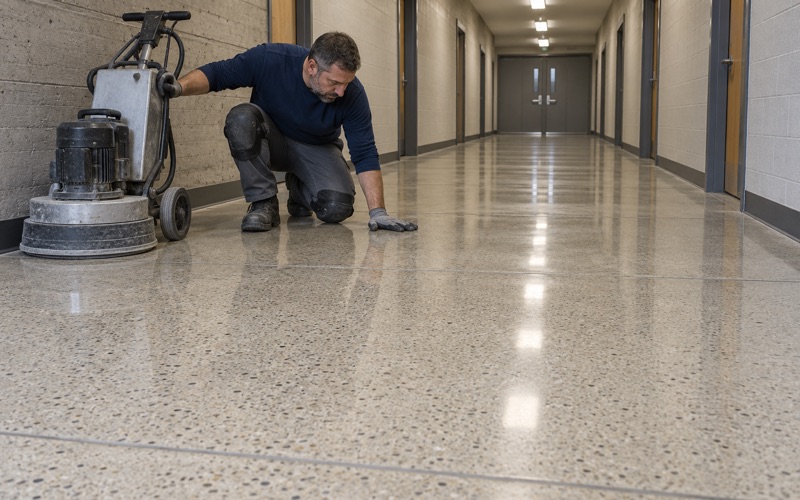
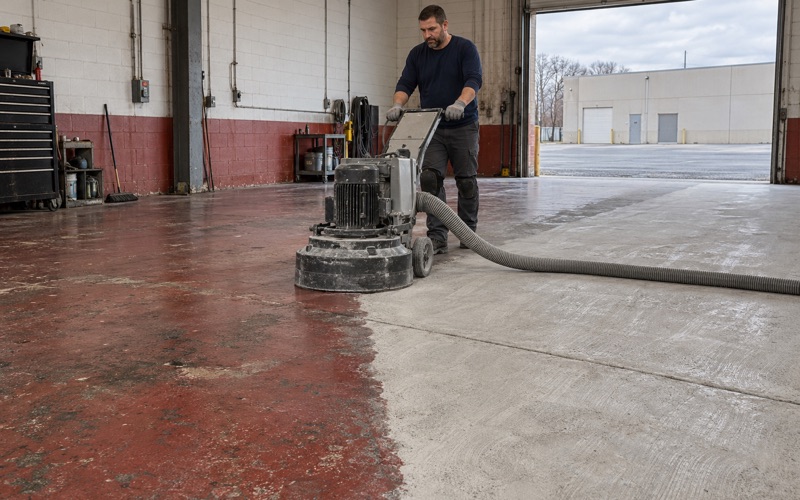
Every slab we coat is opened mechanically, with a diamond grinder or a shot blaster, to an ICRI CSP surface profile matched to the system going down. We do not rely on an acid etch, which leaves residue in a room where cleanliness is the whole point. Grinding dust is captured by vacuum at the machine instead of being rinsed toward a floor drain.
Sharing a building with other users
A preschool inside a public school shares hallways, entries and air with older students, teachers and staff. Any floor work in a building like that has to be phased so the occupied parts stay clean and open. We plan the containment, the dust collection and the access routes with the building’s managers before a grinder is unloaded from the truck.
Winnetka’s construction site rules require water to control dust when cutting stone, brick, concrete or similar materials, and they prohibit gasoline-powered generators in construction activity. We write both into the work plan for any job in the village. Permit questions go to the Village of Winnetka Department of Community Development before we start, because we ask rather than assume.
We select coatings inside the VOC limits of 35 Ill. Adm. Code Part 223 Subpart C, which apply to the person applying them, and the national architectural coatings rule in 40 CFR 59 Subpart D. Illinois licenses no flooring or coatings contractor, so we confirm the village’s own registration, bond and insurance rules before booking. A home job over the state threshold gets a written contract and the consumer-rights pamphlet first.
Whether you manage a converted classroom or own a basement or garage in Winnetka, the first step is the same. We test the slab, map what is on it and put the product, coats and thickness in writing before any grinding starts. That way the floor you get can be checked against the floor you were promised.
- 20+ Years of Floor Work
- Moisture Test in Every Scope
- Written Proposal, Named Products